September 10, 2026
Car Insurance Coverage
Should I Have Collision Insurance on a 10-Year-Old Car in Michigan?
Yes, you may still want collision insurance on a 10-year-old car in Michigan. The vehicle's age alone does not determine whether the coverage is worth keeping. Instead, look at its current value, collision premium, deductible, and whether you could afford to repair or replace the car yourself.
If you own the car outright, you have more flexibility when deciding whether collision coverage still makes financial sense. However, a lender or leasing company may have its own coverage requirements if you still finance or lease the vehicle.
The decision also depends on the type of coverage you have. Michigan offers limited, standard, and broad form collision, and each handles deductibles and fault differently. Keep reading to see how these options work and how to decide whether collision coverage still makes sense for your 10-year-old car.
How Collision Insurance Works for a 10-Year-Old Car in Michigan
Collision coverage helps pay for covered damage to your own vehicle after a crash. That protection can be useful on an older car, but its value changes as the vehicle depreciates. For a 10-year-old car, the key question is whether the financial protection still justifies the cost of the coverage.
What Collision Coverage Pays For
Collision insurance generally pays for covered damage to your vehicle caused by a collision. For example, coverage may apply if you:
- Hit another vehicle.
- Hit a guardrail, pole, tree, or other object.
- Lose control and overturn the vehicle.
- Hit a pothole, depending on the policy.
- Sustain other covered collision damage.
Collision coverage does not pay for every type of vehicle damage. Comprehensive coverage handles different losses, such as theft, vandalism, fire, certain weather-related damage, and animal strikes. We will look at the difference between these two coverages later in the article.
Why Michigan No-Fault Insurance Does Not Replace Collision Coverage
Michigan's required no-fault insurance does not generally pay to repair your own vehicle after an accident. Required coverage includes Personal Injury Protection (PIP), Property Protection Insurance (PPI), and residual bodily injury and property damage liability. These cover different risks and do not replace collision coverage for most damage to your own car.
There is one important exception involving a properly parked vehicle. If another vehicle hits your properly parked car, Michigan's no-fault system can provide coverage for that damage. Outside that situation, you generally need collision coverage to protect your own vehicle from covered crash damage.
This distinction matters when deciding whether to drop collision. You can still meet Michigan's required insurance rules without collision coverage. However, you would take on more of the financial risk if your own car is damaged in a crash.
Is Collision Insurance Required in Michigan?
No. Michigan does not require drivers to carry collision insurance. It is an optional physical-damage coverage that you can add to your policy based on your needs and financial situation.
However, your loan or lease agreement can make collision coverage effectively mandatory for you. Lenders and leasing companies often require physical damage coverage because they have a financial interest in the vehicle.
Before dropping collision, check whether:
- You still have an auto loan.
- You are leasing the vehicle.
- Your lender requires collision and comprehensive coverage.
- Your loan balance is higher than the vehicle's current value.
- Your policy has any specific coverage requirements.
If the car is paid off, the decision becomes primarily a question of risk and cost.
What Happens if You Drive Without Collision Coverage?
If you do not have collision coverage and your vehicle is damaged in a crash, you may have to pay for the repairs yourself. A serious accident could leave you facing a large repair bill or the full financial loss if the vehicle is totaled. According to the Michigan Department of Insurance and Financial Services (DIFS), drivers without collision coverage are responsible for damage to their own vehicle, even when they are not at fault.
Without collision coverage, you also take on more financial risk after an accident. Your options can change when another driver is responsible, but Michigan's mini-tort rules have specific limits and requirements. We explain how mini-tort works later in the article.
What Type of Collision Coverage Do You Have?
If you have collision insurance in Michigan, your policy may include limited, standard, or broad form collision coverage. According to the Michigan Legislature, these three types of collision coverage differ in how fault affects coverage and when a deductible applies. Knowing which type you have can help you understand the protection you have before deciding whether collision insurance is still worthwhile for your 10-year-old car.
Collision type | When it generally pays | Deductible |
Broad form | Covered collision regardless of fault | Generally waived if you are 50% or less at fault |
Standard | Covered collision regardless of fault | Generally applies regardless of fault |
Limited | Covered collision when you are 50% or less at fault | Generally applies when coverage applies |
Your policy documents will show which type of collision coverage you have and the deductible that applies. Check your declarations page before comparing your coverage costs with your vehicle's value.
Broad Form Collision
Broad form collision provides the broadest protection of the three Michigan options. It generally covers damage from a covered collision regardless of who is at fault, and the deductible is generally waived when you are 50% or less at fault.
For an older vehicle, this can provide useful protection when another driver shares responsibility for the crash. However, you should still compare the coverage with your annual premium and the vehicle's current value.
Standard Collision
Standard collision provides coverage for covered collision damage regardless of who is at fault. Unlike broad form collision, the deductible generally applies when you file a covered claim.
This can make standard collision easier to compare with your budget because you know the deductible you selected will generally be part of the claim cost. When deciding whether to keep it on a 10-year-old car, consider that deductible alongside your annual premium and the vehicle's value.
Limited Collision
Limited collision provides narrower protection than broad or standard collision. It generally covers covered collision damage when you are not more than 50% at fault, while coverage may not apply when you are more than 50% at fault.
Because the protection is narrower, you should understand what happens if you cause the accident before choosing this option. For a 10-year-old vehicle, compare the coverage with your car's value and your ability to handle repair costs yourself.
How Much Is Your 10-Year-Old Car Actually Worth?
Your vehicle's current value is one of the most important numbers in this decision. Two 10-year-old cars can have very different values because of their model, condition, mileage, and demand. Finding a realistic value gives you a better starting point for comparing collision coverage with the potential financial loss.
Check Your Car's Current Market Value
Start by researching your vehicle's current market value. Kelley Blue Book and other established vehicle valuation resources can help you estimate what similar cars are worth today. You can also compare listings for similar vehicles in your local area to see whether the estimate reflects the market where you live.
Consider these factors:
- Mileage: Lower mileage can support a higher value.
- Condition: A well-maintained vehicle may be worth more.
- Trim: Higher trims can retain more value.
- Features: Options and equipment can affect resale value.
- Maintenance: Service records can support the vehicle's condition.
- Local demand: Popular models may retain value better.
Do not use the original purchase price as your current vehicle value. A car that cost $30,000 a decade ago may be worth much less today. At the same time, certain models can retain more value than expected.
Understand Actual Cash Value
Actual cash value, or ACV, is the vehicle's value around the time of a covered loss. It is different from the amount you originally paid for the car. If the vehicle is totaled, the applicable deductible can reduce the amount paid under the policy.
For example, if a vehicle has an ACV of $6,000 and a $1,000 deductible, the deductible would reduce the covered claim payment before other policy terms are considered. Therefore, your vehicle's current value and deductible are important when evaluating collision coverage.
Why Age Alone Does Not Determine Whether Collision Is Worth It
A 10-year-old car is not automatically too old for collision insurance. Two vehicles of the same age can have very different values, repair costs, and replacement costs. For that reason, the vehicle's age should be a starting point rather than the deciding factor.
For example, a well-maintained 10-year-old SUV may still be worth $12,000, while another vehicle of the same age may be worth only $3,000. The better comparison is between your vehicle's value, collision premium, deductible, and ability to absorb a loss.
Before deciding, consider:
- Your vehicle's current value.
- Your annual collision premium.
- Your collision deductible.
- Your ability to replace the vehicle.
- Whether a lender requires the coverage.
How to Determine if Collision Insurance Is Worth the Cost
There is no universal rule that tells every driver when to drop collision coverage. Instead, compare the cost of the coverage with the amount of financial protection it could provide. Then consider whether you could handle the remaining risk yourself.
Compare Your Annual Collision Premium With Your Car's Value
Start by finding the amount you pay specifically for collision coverage. Do not use your entire auto insurance premium because that amount can include liability, PIP, PPI, comprehensive, and other coverages.
One commonly cited rule of thumb is the 10x rule. According to the Insurance Information Institute, if a car is worth less than 10 times the premium for collision and comprehensive coverage, purchasing the coverage may not be cost-effective. However, this is only a guideline, not a rule that applies to every driver.
For example:
Car value | Annual collision premium | Value ÷ premium |
$3,000 | $500 | 6x |
$5,000 | $500 | 10x |
$8,000 | $500 | 16x |
$12,000 | $500 | 24x |
Factor in Your Collision Deductible
Your collision deductible is the amount you agree to pay toward a covered claim before your insurance pays the remaining covered amount. A $1,000 deductible can have a much bigger impact on a $3,000 vehicle than on a $12,000 vehicle.
A higher deductible may lower your premium, but it also means you need more money available after a covered loss. According to DIFS, choosing a deductible you can afford is important because you may need to pay that amount when you file a covered claim. Compare the premium savings with the amount you could comfortably pay out of pocket.
Before changing your deductible, compare the options:
Option
Potential advantage
Potential drawback
Lower deductible
Less out-of-pocket after a claim
Higher premium
Higher deductible
Lower premium
More money needed after a claim
No collision
Lowest collision cost
You accept the vehicle-loss risk
Consider What You Would Do After a Total Loss
Option | Potential advantage | Potential drawback |
Lower deductible | Less out-of-pocket after a claim | Higher premium |
Higher deductible | Lower premium | More money needed after a claim |
No collision | Lowest collision cost | You accept the vehicle-loss risk |
A total loss can create a financial problem even when collision coverage looks expensive. Ask yourself what you would do if your car were totaled tomorrow and you had to replace it.
Consider:
- Could you buy another vehicle with your current savings?
- Would you need to take out another auto loan?
- Could you cover a replacement down payment?
- Would losing the vehicle affect your ability to work?
If replacing the car would put significant pressure on your finances, keeping collision coverage may be worth considering even if the vehicle is 10 years old.
When Keeping Collision Insurance on a 10-Year-Old Car Makes Sense
Keeping collision coverage may make sense when losing the vehicle would create a financial or transportation problem. The strongest reasons usually involve the amount you could lose, the cost of replacing the car, and the price of the coverage.
Your Car Still Has Significant Value
A 10-year-old car can still have substantial value depending on its model, condition, mileage, and demand. If your vehicle would be expensive to replace, collision coverage can help protect you from taking on that entire loss yourself.
There is no specific vehicle value that automatically makes collision worthwhile. Instead, compare the potential loss with what you pay for coverage and what you could afford to handle on your own.
You Could Not Easily Replace the Car
Your dependence on the vehicle can also affect the decision. If you rely on your car for work, school, family responsibilities, or daily transportation, losing it could disrupt your routine immediately.
In that situation, collision coverage may provide value beyond the vehicle's market price because it can help you manage the financial impact of a covered loss.
Your Collision Premium Is Reasonable Compared With the Potential Loss
A reasonable premium can make collision easier to justify. For example, paying $400 annually for collision on a $10,000 vehicle is a different situation from paying $700 annually on a $3,000 vehicle.
Review the numbers at renewal. Your premium, deductible, and vehicle value can all change, so a decision that made sense last year may not make sense today.
When Dropping Collision Insurance May Make Sense
Dropping collision may make sense when your 10-year-old car has limited value and you could comfortably handle a repair or replacement yourself. According to the Michigan Department of Insurance and Financial Services (DIFS), owners of older cars may decide not to carry collision and comprehensive coverage, while financed vehicles may be subject to lender requirements. Before making the change, compare your car's current value, collision premium, and deductible to determine whether the coverage still provides enough value for your situation.
Should You Drop Collision but Keep Comprehensive in Michigan?
You do not necessarily need to drop both coverages at the same time. Collision and comprehensive protect against different types of vehicle losses, so you can evaluate them separately. For some older vehicles, keeping comprehensive after dropping collision may provide a useful middle ground.
Collision and Comprehensive Protect Against Different Risks
Collision covers damage caused by covered crashes. Comprehensive coverage generally covers losses that are not caused by a collision, including:
- Theft
- Vandalism
- Fire
- Flood
- Falling objects
- Certain weather-related damage
- Animal strikes
The key difference is the type of event that causes the damage. Comprehensive coverage can protect against certain non-collision losses, but it does not replace collision coverage for damage caused by a covered crash.
Why Comprehensive May Still Be Worth Considering on an Older Car
Comprehensive coverage can still be worth considering on an older car because many non-collision risks remain regardless of the vehicle's age. If the cost is reasonable and you would still want protection against those risks, you could keep comprehensive even after dropping collision.
Before making that change, compare the cost of comprehensive with the value of the protection it provides. Your insurer can also explain how removing collision would affect your overall premium.
Michigan's Mini-Tort Rule and Older Vehicles
Michigan's mini-tort rules provide a limited way to recover certain vehicle damage from another driver after a qualifying accident. According to the Michigan Courts, Michigan's mini-tort provision allows recovery of up to $3,000 for qualifying accidents occurring on or after July 1, 2020, to the extent the damages are not covered by insurance. However, mini-tort does not provide the same protection as collision coverage and should not be viewed as a substitute for it.
When Another Driver May Be Responsible for Your Vehicle Damage
Michigan's mini-tort rules can apply when another driver is sufficiently at fault and certain vehicle damage is not covered by insurance.
If another driver is at least 50% at fault, you may be able to recover qualifying vehicle damage that is not otherwise covered by insurance. However, specific fault, coverage, and statutory requirements apply.
If you have collision coverage, mini-tort may also be relevant when you seek recovery for a qualifying deductible from an at-fault driver. If you do not have collision coverage, a qualifying mini-tort claim may provide some recovery for your vehicle damage, but it does not eliminate your responsibility for costs that fall outside the claim.
Why Mini-Tort Is Not a Replacement for Collision Coverage
Mini-tort should not be treated as a substitute for collision coverage. It applies only in qualifying situations and provides more limited protection than coverage designed to protect your own vehicle.
If you are considering dropping collision, treat any potential mini-tort recovery as a secondary option rather than your primary protection against vehicle damage. You could still have repair or replacement costs that are not recovered through a mini-tort claim.
The Bottom Line: Is Collision Worth It for My 10-Year-Old Car?
A 10-year-old car does not automatically mean you should drop collision insurance. The better question is whether the coverage provides enough financial protection to justify what you pay for it. Review your vehicle's value, collision premium, deductible, and ability to handle a loss before changing your coverage.
If the car still has meaningful value and replacing it would create financial strain, keeping collision may make sense. If the vehicle has little remaining value and you could comfortably absorb the loss, dropping collision may be reasonable. If you want help evaluating your options, connect with a local USA Auto agent to review your Michigan auto insurance needs and explore coverage options that fit your vehicle and budget.
Frequently Asked Questions (FAQs)
Can I Have Collision Insurance on a 10-Year-Old Car Without Comprehensive Coverage?
Collision and comprehensive are separate coverages, so you may be able to carry collision without comprehensive. However, coverage combinations can vary by insurer, and a lender may require both if the vehicle is financed or leased. Check your policy and loan or lease agreement before making a change.
Does Collision Insurance Cover Mechanical Problems on an Older Car?
No. Collision coverage generally applies to damage caused by a covered collision, not mechanical breakdowns or normal wear and tear. Problems such as an aging engine, transmission failure, or routine maintenance would generally fall outside collision coverage.
Can I Lower My Collision Premium Without Dropping Coverage?
You may have options to reduce the cost without removing collision altogether. For example, you can ask your insurer about a higher deductible and compare how much the premium changes before deciding whether the savings are worthwhile.
Does Collision Insurance Cover a Hit-and-Run in Michigan?
Collision coverage may cover damage to your vehicle after a hit-and-run, depending on the circumstances and your policy terms. If you do not have collision coverage, your options may be more limited. Review your policy and deductible before deciding how to handle the damage.
Can I Change My Collision Coverage After My Car Is Paid Off?
Yes. Once a vehicle is paid off, you generally have more flexibility because the lender's coverage requirements no longer apply. However, dropping or changing collision coverage can increase your financial responsibility after a covered loss, so review the costs and risks before making the change.
References:
1. Insurance Information Institute. (n.d.). Nine ways to lower your auto insurance costs. https://www.iii.org/article/nine-ways-to-lower-your-auto-insurance-costs
2. Insurance Information Institute. (n.d.). What is covered by collision and comprehensive auto insurance? https://www.iii.org/article/what-is-covered-by-collision-and-comprehensive-auto-insurance
3. Michigan Department of Insurance and Financial Services. (n.d.). Frequently asked questions: Information on purchasing auto insurance. https://www.michigan.gov/autoinsurance/frequently-asked-questions
4. Michigan Department of Insurance and Financial Services. (n.d.). Purchasing auto insurance FAQ. https://www.michigan.gov/difs/news-and-outreach/faq/insurance/info-purchasing-auto-insurance
5. Michigan Department of Insurance and Financial Services. (2023, June 28). DIFS offers auto insurance shopping tips to Michiganders. https://www.michigan.gov/difs/news-and-outreach/press-releases/2023/06/28/difs-offers-auto-insurance-shopping-tips-to-michiganders
6. Michigan Department of Insurance and Financial Services. (2025). The impact of Michigan auto insurance reform. https://www.michigan.gov/difs/-/media/Project/Websites/difs/Report/FY2025/The_Impact_of_Michigan_Auto_Insurance-Reform.pdf
7. Michigan Courts. (n.d.). Examples of common areas of substantive law at issue in small claims proceedings. https://www.courts.michigan.gov/4a13e2/siteassets/publications/benchbooks/dcmm/dcmmresponsivehtml5.zip/DCMM/Ch_7_Small_Claims/Examples_of_Common_Areas_of_Substantive_Law_at_Issue_in_Small_Claims_Proceedings.htm?rhtocid=_1_11_13
Tag :
auto insurance
Latest Blog
Does Car Insurance Cover Vandalism?
Yes, car insurance does cover vandalism, but only if you have comprehensive coverage. If you just have the basic liability coverage, your auto insurance policy won’t cover your car’s repair or replacement costs caused by vandalism.
What is a Deductible in Car Insurance?
A deductible in car insurance is the amount you agree to pay out of pocket toward a covered claim before your insurance provider pays the remaining costs.

Does Car Insurance Cover Tornado Damage in Michigan?
Yes, car insurance can cover tornado damage in Michigan if you have comprehensive coverage. This optional coverage generally protects your vehicle from covered losses that do not result from a collision.
Can You Get Temporary Car Insurance?
Yes, you can get coverage for short-term driving needs, but probably not in the way you expect.
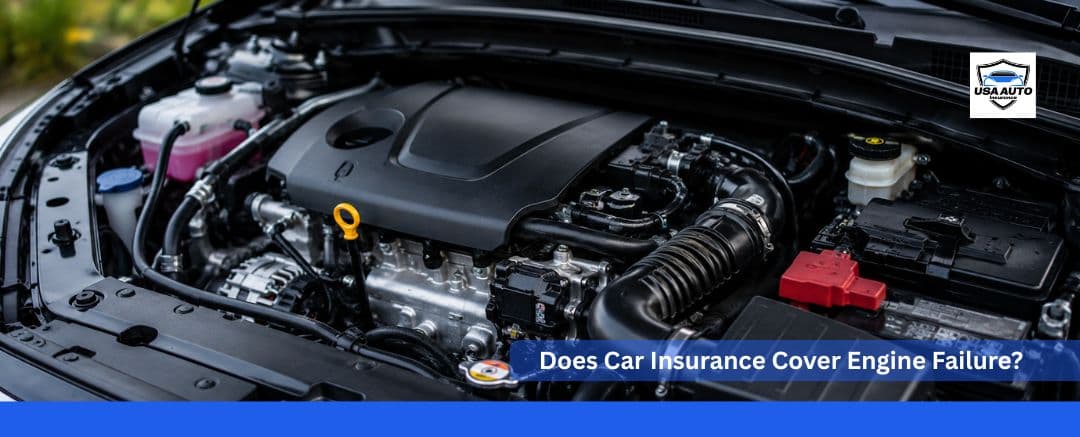
Does Car Insurance Cover Engine Failure?
Generally, no. Standard auto insurance doesn't cover engine failure caused by mechanical breakdown, normal wear and tear, or poor maintenance.
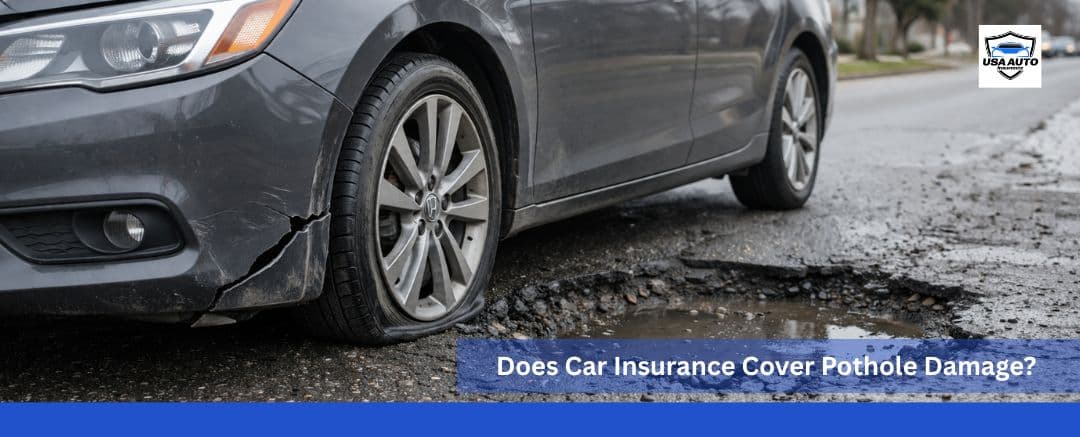
Does Car Insurance Cover Pothole Damage?
Car insurance can cover pothole damage, but it depends on the type of coverage you have. In most cases, collision coverage helps pay for repairs if your vehicle is damaged after hitting a pothole.

USA Auto Insurance
USA Auto is a licensed Managing General Agent (MGA) providing auto insurance policies underwritten by USA Underwriters Insurance Company.
Support
Copyright © USA Auto
Built by Neutrix | Powered by Neutrix Systems