September 6, 2026
Car Insurance Coverage
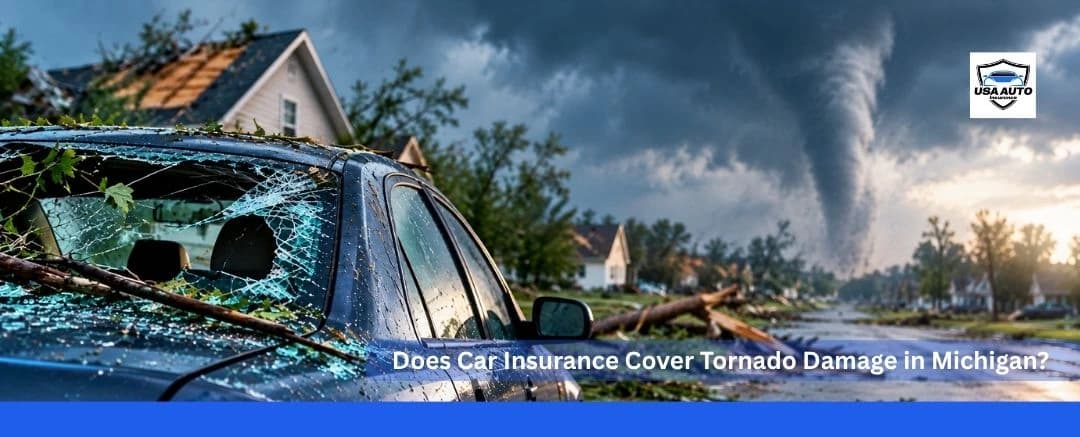
Does Car Insurance Cover Tornado Damage in Michigan?
Yes, car insurance can cover tornado damage in Michigan if you have comprehensive coverage. This optional coverage generally protects your vehicle from covered losses that do not result from a collision. Depending on your policy, that can include damage from falling objects, wind, hail, flooding, and other storm-related events.
Michigan's required no-fault coverage does not generally pay for direct tornado damage to your vehicle. Physical damage coverage depends on the type of loss and the optional coverage on your policy. Your deductible and policy terms can also affect what your insurer pays.
This guide explains which auto insurance coverage applies, what tornado damage may qualify, how deductibles and total losses work, and what to do after a storm damages your car.
What Type of Car Insurance Covers Tornado Damage?
Tornadoes are a real risk for Michigan drivers. The National Weather Service confirmed nine tornadoes across Lower Michigan during April 14–15, 2026, along with widespread straight-line wind damage, fallen trees, and other storm hazards.
When a tornado damages your vehicle, the type of insurance coverage you have determines whether the loss may be covered. Comprehensive and collision coverage protect against different types of vehicle damage.
Coverage | Direct Tornado Damage? | When It May Apply |
Comprehensive | Generally yes | Covered non-collision damage such as falling objects, hail, wind, or flood |
Collision | Usually no | When your vehicle hits another vehicle or object |
Liability | No | Certain injuries or property damage you cause to others |
Michigan No-Fault | Not generally | Required no-fault benefits rather than direct storm damage to your vehicle |
Comprehensive Coverage
Comprehensive coverage is generally the main coverage for direct tornado damage to your vehicle. It applies to covered losses that do not result from a collision. Michigan's insurance guidance lists falling objects, fire, flood, vandalism, and animal collisions among examples of losses covered by comprehensive insurance. Comprehensive coverage is optional in Michigan, although a lender may require it when you finance a vehicle.
Collision Coverage
Collision coverage applies when your vehicle hits another vehicle or an object. It can therefore become relevant if you collide with something while driving during a tornado or severe storm.
For example, you may hit a fallen tree that blocks the road. The resulting damage may fall under collision coverage because your vehicle struck an object.
The situation is different when a tree falls onto your parked car. Direct damage from the falling tree may instead fall under comprehensive coverage. In other words, the cause of the damage matters. Collision covers the impact, while comprehensive generally handles covered non-collision storm damage.
Liability and Michigan No-Fault Coverage
Michigan requires drivers to carry no-fault auto insurance, but that coverage does not generally pay for direct tornado damage to your vehicle. Liability coverage also protects against certain injuries or property damage you cause to others.
If your policy only includes required coverage, you generally do not have protection for direct storm damage to your own car. Comprehensive coverage is the key coverage to check for tornado-related vehicle damage.
What Tornado Damage Does Comprehensive Insurance Cover?
A tornado can damage a vehicle in several ways. Comprehensive coverage may apply when the loss comes from a covered non-collision event.
Flying Debris and Falling Objects
Tornado winds can turn ordinary objects into dangerous debris. Branches, roofing materials, signs, and other loose objects can strike vehicles. The damage can range from small dents to broken glass and major body damage. A parked vehicle can be especially vulnerable when debris moves through the area.
Falling objects are specifically listed as an example of a loss that comprehensive insurance can cover. For example, a piece of roofing may hit your windshield during a tornado. If the loss qualifies under your comprehensive coverage, your insurer may pay for eligible repairs after your deductible.
Fallen Trees and Branches
Fallen trees are another common source of vehicle damage during severe weather. Strong winds can uproot trees or break large branches. Those trees and branches can then fall onto nearby vehicles.
If a tree falls directly onto your car, comprehensive coverage may apply. The same can be true when a large branch damages your hood, roof, or windows. When you file a claim, take photos of both the vehicle and the fallen tree or branch. This can help document what caused the damage.
Wind and Hail Damage
Strong winds can damage a vehicle without causing a crash. Hail can also dent the hood, roof, doors, and trunk. Large hailstones may crack or break windows and windshields. Wind can also send other objects into the vehicle.
Michigan's severe-weather guidance includes tornadoes, hail, wind, and thunderstorms among the weather events consumers should prepare for.
So, does comprehensive cover wind damage? It may, when the loss qualifies under the policy. Your insurer will review the circumstances and determine the applicable coverage.
Flood and Water Damage
Tornadoes can bring heavy rain and flooding along with strong winds. Water can enter a vehicle through broken windows or other storm damage. In severe cases, floodwater can also submerge the vehicle. Comprehensive coverage may cover qualifying flood damage to a vehicle. However, the circumstances surrounding the water damage still matter.
For example, water entering through a broken window after a tornado is different from a mechanical problem unrelated to the storm. When filing a claim, explain how the water reached the vehicle and let your insurer determine the applicable coverage.
Damage From Collapsed Structures
Tornadoes can damage garages, carports, sheds, and other structures. Parts of those structures may then fall onto vehicles. A garage roof could collapse onto a parked car. A carport could also break apart and damage a vehicle underneath.
Comprehensive coverage may apply when a covered tornado causes the structure to collapse onto your vehicle. When documenting the loss, photograph the vehicle and the damaged structure. This can provide a clearer record of how the damage occurred.
When Is Tornado Damage Not Covered?
Not every tornado-related loss is covered. Your coverage, the cause of the damage, and your policy's exclusions can affect the claim.
When You Don't Have Comprehensive Coverage
The most straightforward limitation is not having comprehensive coverage. If your policy does not include it, direct tornado damage to your vehicle may not be covered. This can affect drivers who carry only required insurance. Michigan's no-fault system does not automatically provide comprehensive protection for your own vehicle.
For example, suppose a tornado drops a tree onto your parked car. If you only have liability and required no-fault coverage, you generally cannot rely on those coverages to repair the vehicle. Check your declarations page before severe weather to confirm whether comprehensive coverage is included.
When the Damage Falls Under a Different Coverage
Not every storm-related loss belongs under comprehensive coverage. The event that caused the damage can determine which coverage applies. Suppose a tornado knocks a tree into the road. You then hit the tree while driving. The damage may be handled under collision coverage because your vehicle collided with an object.
Now consider a different situation. A tree falls onto your parked car while the vehicle is unattended. That direct damage may fall under comprehensive coverage. When you report a claim, describe the event accurately. Your insurer can then determine which coverage applies.
When the Policy Excludes the Loss
Comprehensive coverage still has policy terms and exclusions. Having comprehensive insurance does not guarantee payment for every type of storm-related loss.
For example, damage caused by a mechanical problem unrelated to the tornado would not become a covered loss simply because you have comprehensive insurance. If you are unsure about an exclusion, check your policy or ask your insurance professional before assuming the damage is covered.
Does Tornado Damage Coverage Have a Deductible?
Yes. Comprehensive coverage usually comes with a deductible, which is the amount you pay toward a covered loss before insurance pays the remaining eligible amount.
For example, suppose tornado damage causes $4,000 in covered repairs. If your comprehensive deductible is $500, you would generally pay $500. Your insurer would then consider the remaining $3,500 under your policy.
Your deductible appears on your declarations page. Check this amount before severe weather so you know what you may need to pay after a claim. A higher deductible can reduce your premium, but it also means more out-of-pocket costs after a covered loss.
What Happens if a Tornado Totals Your Car?
A tornado can cause enough damage to make repairing a vehicle impractical. In that situation, the insurer may determine that the car is a total loss. The process differs from an ordinary repair claim. Instead of paying only for specific repairs, the insurer evaluates the vehicle and its value.
How the Insurer Determines a Total Loss
After you report the damage, the insurer investigates the claim. An adjuster may inspect the vehicle and assess the extent of the damage. The insurer then determines whether the vehicle can be repaired under the applicable policy and requirements. Severe damage does not automatically mean the car is totaled.
The vehicle's condition before the tornado can also affect the evaluation. Age, mileage, condition, equipment, and market value can all influence its value. If the insurer declares your vehicle a total loss, ask how it reached that decision. You should also review the information used to determine the vehicle's value.
How the Settlement Is Calculated
A total-loss settlement generally reflects the vehicle's value immediately before the loss. This is commonly called its actual cash value (ACV). ACV is not necessarily what you originally paid for the car. Vehicles lose value over time, and market conditions can affect their current worth.
For example, a vehicle purchased for $25,000 several years ago may have a much lower market value today. The settlement would generally reflect its applicable value before the tornado. Review the valuation carefully when you receive it. If information about your vehicle appears incorrect, ask the insurer to explain or correct it.
How to File a Tornado Damage Claim in Michigan
Filing a claim after a tornado can feel overwhelming. However, following a clear process can make it easier. Start with safety, then document the damage and report the claim. Afterward, cooperate with the inspection and review the settlement carefully.
Check for Safety Hazards
Do not rush outside immediately after a tornado. Storm damage can leave behind hazards that are not obvious at first. Look for downed power lines, unstable trees, broken glass, and damaged structures. If you see a downed power line, keep your distance and contact the appropriate authorities.
Wait until the area is safe before inspecting your vehicle. Your safety should come before documenting the claim.
Document the Damage
Once conditions are safe, take clear photos and videos of your vehicle. Capture the damage from different angles and include wider shots of the surrounding area. If safe, photograph fallen trees, branches, debris, or other visible causes of damage. Also record the date, location, and circumstances surrounding the storm.
Do not throw away damaged parts or items unless your insurer tells you to do so. Keep your photographs, videos, receipts, and other records together.
Report the Claim
When reporting the claim, explain what happened clearly. Do not guess about the cause if you are uncertain. Instead, provide the facts you observed and let the insurer investigate.
Have the Vehicle Inspected
Your insurer may arrange an inspection of your vehicle. An adjuster can assess the damage and determine the next steps. Avoid making major repairs before the inspection when you can safely wait. However, reasonable steps may be necessary to prevent additional damage.
Keep receipts for temporary work or supplies used to protect the vehicle. Ask your insurer whether an expense may qualify before spending a significant amount. You should also keep copies of estimates, claim numbers, photographs, and communications. These records can help if questions arise later.
Review the Settlement
Review your repair estimate or settlement carefully. Check the listed damage, deductible, and amount the insurer proposes to pay. If the vehicle is totaled, review the valuation used to calculate the settlement. Make sure the information about your car is accurate, including its model, mileage, condition, and equipment.
Michigan law also sets requirements for handling auto insurance claims. If an insurer does not pay a vehicle-damage claim within 60 days after receiving satisfactory proof of loss, the claim may be considered overdue. Interest may apply in that situation.
If your insurer does not resolve the issue, you can file a complaint with the state.
Will a Tornado Claim Increase Your Michigan Car Insurance Rates?
A tornado claim can affect your future car insurance premium, but a rate increase is not automatic or the same for every Michigan driver. Insurers can consider claims history and other approved rating factors when pricing coverage.
A comprehensive claim is different from an at-fault collision because the driver did not cause the tornado. However, you should not assume that a comprehensive claim will have no effect on future premiums.
If you are concerned about whether a tornado claim will affect your Michigan car insurance rates, ask your insurance professional how claims may factor into your policy pricing. When your policy renews, compare both the premium and coverage. A lower rate is not always better if it leaves you without the protection you need.
Can You Add Comprehensive Coverage Before a Tornado?
You can generally add comprehensive coverage before a loss, subject to the insurer's rules. However, coverage added after a tornado has already damaged your vehicle will not cover that previous damage.
Timing can also matter when a major storm is approaching. An insurer may restrict certain policy changes during an active weather threat. As a result, adding coverage at the last minute may not be possible. As a result, adding coverage at the last minute may not be possible.
Before severe weather, check these three things:
- Whether comprehensive coverage is included
- The deductible that applies
- Whether the coverage fits your vehicle's current value
If you finance your vehicle, check your loan agreement as well. A lender may require comprehensive and collision coverage.
Reviewing your policy before storm season gives you time to address coverage gaps. Once damage occurs, adding coverage cannot protect you from that earlier loss.
Bottom Line: Protect Your Car From Tornado Damage
So, does car insurance cover tornado damage in Michigan? It can, but you generally need comprehensive coverage for direct tornado damage to your vehicle.
Comprehensive coverage may help with qualifying damage from flying debris, fallen trees, hail, wind, flooding, and collapsed structures. Collision coverage may apply when your vehicle hits an object during the storm.
Before severe weather, check whether comprehensive coverage is included and confirm your deductible. If you need help reviewing your Michigan auto insurance options, connect with a local insurance professional at USA Auto to find coverage that fits your needs.
Frequently Asked Questions (FAQs)
Does car insurance cover tornado damage in Michigan?
Yes, if your policy includes comprehensive coverage. Your deductible and policy terms will determine how the claim is handled.
Does comprehensive insurance cover a car parked during a tornado?
It can. Comprehensive coverage may apply when a parked vehicle suffers covered damage from falling trees, flying debris, hail, or other storm-related events.
Can I add comprehensive coverage after a tornado damages my car?
No. Coverage added after the damage occurs cannot cover a loss that happened before the coverage became effective.
Will a tornado claim affect my Michigan car insurance rates?
It can, but a rate increase is not automatic. Insurers may consider your claims history and other approved factors when setting premiums.
What happens if a tornado totals my car?
Your insurer will assess the vehicle's damage and determine whether it is a total loss. If so, the settlement generally reflects the vehicle's actual cash value before the loss, subject to your policy and deductible.
How do I file a tornado damage claim in Michigan?
First, make sure the area is safe. Then document the damage, contact your insurer, provide the requested information, and arrange an inspection if needed.
What should I do if my tornado claim is delayed?
Contact your insurer to ask whether additional information is needed. Keep records of your communications and claim documents. If the issue remains unresolved, you can file a complaint with Michigan's insurance regulator.
References:
1. Michigan Department of Insurance and Financial Services. (n.d.). Tornado / severe storms. Michigan.gov. https://www.michigan.gov/difs/consumers/disaster-prep/tornado-severe-storms
2. Michigan Department of Insurance and Financial Services. (n.d.). Consumer rights. Michigan.gov. https://www.michigan.gov/autoinsurance/choosing-coverage/consumer-rights
3. Michigan Department of Insurance and Financial Services. (n.d.). Choosing coverage. Michigan.gov. https://www.michigan.gov/autoinsurance/choosing-coverage
4. National Weather Service Detroit/Pontiac, MI. (2026, April 15). April 14–15, 2026 tornadoes & severe weather. National Oceanic and Atmospheric Administration. https://www.weather.gov/dtx/tornadoes04152026
5. Swanson, B. (2026, August 13). Does car insurance cover tornado damage? The Zebra. https://www.thezebra.com/auto-insurance/coverage/natural-disasters/does-car-insurance-cover-tornado-damage/
Tag :
auto insurance
Latest Blog
Does Car Insurance Cover Vandalism?
Yes, car insurance does cover vandalism, but only if you have comprehensive coverage. If you just have the basic liability coverage, your auto insurance policy won’t cover your car’s repair or replacement costs caused by vandalism.

What is a Deductible in Car Insurance?
A deductible in car insurance is the amount you agree to pay out of pocket toward a covered claim before your insurance provider pays the remaining costs.
Should I Have Collision Insurance on a 10-Year-Old Car in Michigan?
Yes, you may still want collision insurance on a 10-year-old car in Michigan. The vehicle's age alone does not determine whether the coverage is worth keeping.
Can You Get Temporary Car Insurance?
Yes, you can get coverage for short-term driving needs, but probably not in the way you expect.
Does Car Insurance Cover Engine Failure?
Generally, no. Standard auto insurance doesn't cover engine failure caused by mechanical breakdown, normal wear and tear, or poor maintenance.
Does Car Insurance Cover Pothole Damage?
Car insurance can cover pothole damage, but it depends on the type of coverage you have. In most cases, collision coverage helps pay for repairs if your vehicle is damaged after hitting a pothole.

USA Auto Insurance
USA Auto is a licensed Managing General Agent (MGA) providing auto insurance policies underwritten by USA Underwriters Insurance Company.
Support
Copyright © USA Auto
Built by Neutrix | Powered by Neutrix Systems