December 8, 2025
Car Insurance Coverage
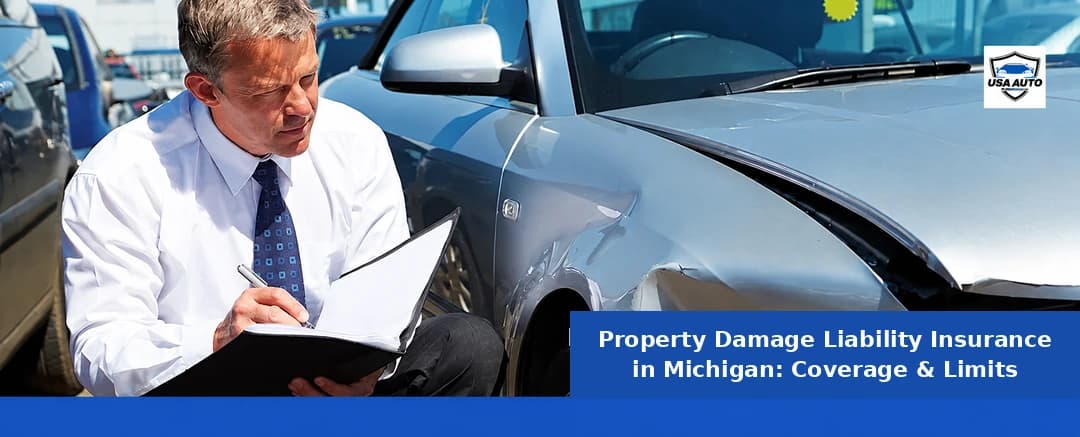
Property Damage Liability Insurance in Michigan: Coverage & Limits
Property damage liability insurance is a part of your car insurance coverage that pays for damage to another person's property when you cause an accident. It covers costs like repairing or replacing a vehicle, fence, or other property. In Michigan, property damage coverage works differently from many other states because auto insurance includes both Property Protection Insurance (PPI) and Residual Bodily Injury and Property Damage (BI/PD) Liability coverage. In this article, we’ll explain what property damage liability covers, what it doesn’t, how property damage coverage works in Michigan, coverage requirements, costs, and why having sufficient coverage really matters.
What Does Property Damage (PD) Liability Insurance Cover?
Property damage coverage steps in when you cause a car accident that results in damage to another person’s property. It helps cover the costs of repairing or replacing what was damaged, so you don’t have to pay everything out of pocket. In Michigan, property damage coverage can come through Property Protection Insurance (PPI) or Residual Bodily Injury and Property Damage (BI/PD) Liability, depending on the circumstances of the accident. This type of liability insurance doesn’t just apply to vehicles. It can extend to different types of property you might damage in an accident.
Here's what property damage liability insurance usually covers:
- Damage to another person’s properly parked vehicle caused by your car in Michigan.
- Damage to buildings, fences, or other property covered by PPI caused during an accident
- Property damage covered under your residual BI/PD liability coverage, including qualifying property damage in another state. Legal defense costs and damages you are found liable for in situations covered by your residual BI/PD liability coverage.
- Certain court costs related to the accident, subject to the terms and limits of your policy.
Looking for a reliable insurance carrier that offers affordable auto insurance quotes? Reach out to USA Auto today. We’re committed to serving both high-risk and standard drivers in Michigan and beyond with budget-friendly auto insurance solutions. Contact us online or simply call (866) 855-1872.
What Does Property Damage Liability Not Cover for You?
- Property damage liability doesn’t cover everything related to accidents. Here’s what it doesn’t cover for you:
- Repairs to your own vehicle (you’d need collision coverage for that).
- Medical bills, lost wages, or personal injury expenses, which are handled under applicable injury-related coverage rather than property damage coverage.
- Damage to items inside your car, like a laptop, phones, or personal belongings.
- Damage to another moving vehicle in Michigan under Property Protection Insurance (PPI). PPI covers damage your vehicle causes to another person’s properly parked vehicle, but it does not cover other damage to cars.
- Routine wear and tear, mechanical breakdowns, or maintenance issues.
Practical Example of Property Damage Liability in Action
Let’s say you’re driving through Detroit on a rainy evening and slide through a stop sign. You lose control and your vehicle hits a properly parked SUV and also damages a nearby fence. The SUV repair bill comes to $18,000, and the fence owner requests $4,000 for replacement. That’s a total of $22,000 in property damage.
Because both the SUV and fence are examples of property that PPI may cover in Michigan, the applicable PPI coverage could cover the $22,000 in damage, subject to the circumstances of the loss and policy terms.
If the accident instead involved another moving vehicle, PPI would not cover that vehicle's damage. Depending on the circumstances, other coverage or Michigan's mini-tort rules may apply.
How Much Property Damage Liability Coverage Do You Need?
The right amount of liability coverage depends on your circumstances, the coverage options available to you, and the amount of financial risk you are comfortable taking. Michigan allows drivers to select higher BI/PD liability limits than the minimum available limits. If you are found responsible for damages that exceed your applicable policy limits, you may be required to pay the amount that is not covered.
Keep in mind that PPI and residual BI/PD liability apply to different types of property damage, so choosing higher BI/PD limits does not change what PPI covers.
Is Property Damage Liability Insurance Required in Every State?
Yes. Michigan requires drivers to carry auto insurance that includes Property Protection Insurance (PPI) and Residual Bodily Injury and Property Damage (BI/PD) Liability coverage as part of the state's auto insurance requirements.
PPI provides up to $1 million for qualifying damage your vehicle causes to another person's property in Michigan. Residual BI/PD liability coverage also includes property damage liability coverage, including a minimum available limit of $10,000 for qualifying property damage in another state.
Having the required coverage is important because driving without the insurance required by Michigan law can result in penalties. Michigan law also requires drivers to provide proof of insurance when requested by law enforcement.
What Are the Minimum Property Damage Coverage Limits in Michigan?
Michigan does not use a single property damage liability minimum that applies to every type of property damage. The required coverage and limits depend on where the damage occurs and the type of property involved.
Michigan Coverage | Required Limit |
Property Protection Insurance (PPI) | Up to $1 million for qualifying property damage in Michigan |
Residual Property Damage Liability | $10,000 minimum for qualifying property damage in another state |
Michigan’s $10,000 residual property damage liability limit should not be confused with the state’s PPI coverage. PPI can provide up to $1 million for qualifying property damage in Michigan, while the $10,000 liability limit applies to qualifying property damage in another state.
These requirements are separate from coverage that may apply to damage to your own vehicle or other situations not covered by PPI.
Property damage coverage is one of Michigan’s broader auto insurance requirements. To know more about the coverages and limits required under Michigan law, our Michigan Auto Insurance Requirements guide covers the other mandatory coverages and applicable limits.
Understanding and Choosing Your PDL Limits
We hope you already know how to read your liability coverage limits, including PDL. Still, if you’re confused, let us help you. So, when you look at your auto insurance coverage, you may see liability limits listed as 250/500/10. The last number, 10 in this case, represents the $10,000 property damage limit under your residual BI/PD liability coverage for qualifying property damage in another state.
Now, to choose the right PDL limit, you need to ask yourself, “Could I afford to pay out of pocket if I cause a costly crash?” If the answer is no, then consider selecting higher limits than the minimum available. In Michigan, the lowest available BI/PD limits are $50,000 per person, $100,000 per accident for bodily injury, and $10,000 for property damage in another state.
If you want additional protection beyond your auto policy limits, you can also consider an umbrella insurance policy, subject to its eligibility requirements and terms.
What If the Cost of Property Damage Goes Beyond My Coverage Limits?
So as we said, your property damage liability insurance only pays up to the amount listed in your auto policy. If the total damage to another person’s property is higher, your insurance company stops paying once your limit is reached. And anything beyond falls under your personal responsibility. In Michigan, this can apply when damages covered by your residual BI/PD liability coverage exceed the limits you selected.
For example, suppose you are involved in an accident outside Michigan and cause $60,000 in qualifying property damage, but your policy has a $10,000 property damage liability limit. Your insurer would cover up to $10,000, and you could be responsible for the remaining $50,000.
There are a few ways to reduce this financial risk. First, you should choose higher PDL limits so that you don’t have to face this sort of financial burden in the first place. Second, even if you choose the minimum limits, you may still be responsible for costs that exceed your coverage. Lastly, you can consider an umbrella insurance policy, subject to its terms, conditions, and eligibility requirements. An umbrella plan provides additional protection once your auto insurance coverage hits its limits, subject to the policy’s terms, conditions, and eligibility requirements.
How Much Does Property Damage Liability Insurance Cost in Michigan?
The exact cost depends on several factors. Because property damage liability is part of the broader BI/PD coverage, insurers generally do not charge a separate premium for PD liability alone. In Michigan, your overall auto insurance premium also reflects required coverages such as Property Protection Insurance (PPI).
For context, ValuePenguin’s 2026 data puts Michigan’s average car insurance cost at about $260 per month for full coverage and $90 per month for minimum coverage. However, these are overall policy costs, not the price of property damage liability alone.
Your actual car insurance cost can vary based on several factors, including:
- Claim history
- Driving history
- Vehicle type (make and model)
- Chosen insurance company
- Chosen coverage limits
How Do I File a Property Damage Claim?
Filing a property damage liability claim is pretty straightforward if you have the right documentation. So, here’s how to do it. First, start by reporting the car accident to your insurance company as soon as possible. Share all the details about where it happened, who was involved, and any photos or videos of the damage. It’s also best if you provide any witness details. Once you’re done, the insurer will assign a claim adjuster to review what happened and estimate repair costs for the other party’s property, if the damage is covered under your policy.
Cooperate fully with the investigation, stay honest about the facts, and keep records of all communication. If the other driver files a claim against you, your insurer will handle payments up to your coverage limit and may provide legal defense when the claim falls within your covered liability protection, subject to your policy terms.
Is Property Damage Liability Insurance Worth It?
Yes. Michigan requires drivers to carry auto insurance that includes property damage protection through PPI and Residual BI/PD Liability coverage. Beyond being required, having adequate coverage can help protect you from financial losses when you are responsible for covered property damage.
The Bottom Line
Michigan’s property damage coverage can vary depending on the type of property damaged and where the accident happens. Understanding how PPI and residual BI/PD liability work can help clarify what your policy covers.
If you have questions about your coverage, connect with a local USA Auto agent to discuss your policy and Michigan’s auto insurance requirements.
Property Damage Liability Insurance FAQs
Is property damage liability insurance required in Michigan?
Yes. Michigan requires drivers to carry auto insurance that includes Property Protection Insurance (PPI) and Residual Bodily Injury and Property Damage (BI/PD) Liability coverage. Driving without the required insurance can result in penalties under Michigan law.
Is property damage the same as collision?
No. Property damage liability generally covers qualifying damage to another person’s property for which you are legally responsible, depending on the applicable coverage. On the flip side, collision insurance pays to repair or replace your own vehicle after a covered accident, subject to your policy terms.
What is the minimum property damage liability coverage in Michigan?
Michigan’s minimum available residual property damage liability limit is $10,000 for qualifying property damage in another state. However, this should not be confused with Michigan’s PPI coverage, which can provide up to $1 million for qualifying property damage in Michigan.
Can I choose higher property damage liability limits in Michigan?
Yes. Michigan drivers can select higher liability limits than the minimum available limits. The appropriate limits depend on your circumstances and how much you could afford to pay if covered damages exceed your policy limits.
Tag :
auto insurance
Latest Blog
Does Car Insurance Cover Vandalism?
Yes, car insurance does cover vandalism, but only if you have comprehensive coverage. If you just have the basic liability coverage, your auto insurance policy won’t cover your car’s repair or replacement costs caused by vandalism.
What is a Deductible in Car Insurance?
A deductible in car insurance is the amount you agree to pay out of pocket toward a covered claim before your insurance provider pays the remaining costs.
Should I Have Collision Insurance on a 10-Year-Old Car in Michigan?
Yes, you may still want collision insurance on a 10-year-old car in Michigan. The vehicle's age alone does not determine whether the coverage is worth keeping.
Does Car Insurance Cover Tornado Damage in Michigan?
Yes, car insurance can cover tornado damage in Michigan if you have comprehensive coverage. This optional coverage generally protects your vehicle from covered losses that do not result from a collision.

Can You Get Temporary Car Insurance?
Yes, you can get coverage for short-term driving needs, but probably not in the way you expect.
Does Car Insurance Cover Engine Failure?
Generally, no. Standard auto insurance doesn't cover engine failure caused by mechanical breakdown, normal wear and tear, or poor maintenance.

USA Auto Insurance
USA Auto is a licensed Managing General Agent (MGA) providing auto insurance policies underwritten by USA Underwriters Insurance Company.
Support
Copyright © USA Auto
Built by Neutrix | Powered by Neutrix Systems