
September 15, 2026
Car Insurance Coverage
What is a Deductible in Car Insurance?
A deductible in car insurance is the amount you agree to pay out of pocket toward a covered claim before your insurance provider pays the remaining costs. It is commonly offered for certain types of car insurance coverage, such as collision, comprehensive, and uninsured/underinsured motorist property damage coverage (UMPD).
The best part about deductibles is that you will get multiple options to choose your preferred deductible amount. However, if you don’t fully understand how deductibles work, including their benefits and potential costs, choosing the right deductible can become confusing.
So, in this guide, you’ll learn how car insurance deductibles work, when they apply, and whether a low or high deductible may be the better option for your needs.
How Do Car Insurance Deductibles Work?
Car insurance deductibles work by requiring you to pay a certain amount out of pocket before your insurer covers the remaining costs of a covered claim. The deductible amount is selected when you purchase your car insurance policy, and it usually applies separately to certain coverages like collision, comprehensive, or uninsured/underinsured motorist property coverage.
For example, let’s say you accidentally hit another car and the repair cost for your vehicle comes to $3,000. If your collision coverage has a $500 deductible, you would need to pay the first $500 yourself, while your insurer would cover the remaining $2,500.
Similarly, if a tree branch falls on your parked car during a storm and the damage repair costs $2,000 under comprehensive coverage, having a $250 deductible means you pay $250, and your insurance company pays the remaining $1,750.
However, if the repair cost is lower than your deductible amount, your insurer usually won’t pay anything. For instance, if your deductible is $1,000 but the repair bill is only $600, you would need to pay the entire repair cost yourself because it doesn’t exceed your deductible.
This is also why choosing the right deductible amount matters. A higher deductible generally lowers your monthly or annual insurance premium because you’re agreeing to pay more out of pocket during a claim. On the other hand, a lower deductible increases your premium but reduces your financial burden when filing a claim.
What Car Insurance Coverages Have Deductibles?
It’s important to choose the right deductible amount when selecting your car insurance coverage, as it directly affects both your insurance premium and out-of-pocket costs during a claim. While a higher deductible can help lower your monthly premium, it also means paying more upfront before your insurance coverage kicks in.
For example, drivers in Michigan often pay higher-than-average insurance rates compared to many other states because of the state’s unique no-fault insurance system. According to Bankrate data, the national average cost of car insurance with full coverage is $2,697 per year. By comparison, the average cost of full coverage in Michigan is $3,207, which is about $510 more, or 18.9% higher than the national average.
Now, if you’re trying to understand which car insurance coverage have deductibles, it actually varies depending on state laws, and the insurer’s terms and conditions. In situations like this, it’s best to work with an insurer in your state to opt for deductibles for specific coverage.
So, if you’re located in Michigan, you should explore coverage from a reliable Michigan-based insurance provider to choose deductibles that balance affordable premiums with manageable claim expenses. For a general idea, and to help you understand how deductibles work for each coverage, here’s a breakdown of the most common options available.
Collision Coverage
Collision coverage typically includes a deductible and helps pay for damage to your vehicle after a collision-related accident, regardless of who was at fault. This coverage usually applies if you hit another vehicle, crash into an object like a fence or pole, or if your car rolls over in an accident.
When filing a collision claim, you are responsible for paying your selected deductible amount before your insurer covers the remaining repair costs. For example, if your vehicle suffers $4,000 worth of damage after an accident and your collision deductible is $500, you would pay the first $500 while your insurance company covers the remaining $3,500.
Comprehensive Coverage
Comprehensive coverage also usually comes with a deductible and helps pay for damage to your vehicle caused by non-collision-related incidents. This coverage commonly applies to situations such as theft, vandalism, fire, falling objects, hail, floods, storms, or even animal-related damage like hitting a deer.
Just like collision coverage, you must pay your deductible amount before your insurance company covers the remaining repair or replacement costs. For example, if a hailstorm causes $2,500 worth of damage to your vehicle and your comprehensive deductible is $250, you would pay the first $250 while your insurer covers the remaining $2,250.
Similarly, if your car gets stolen and later recovered with $1,500 worth of damage, having a $500 comprehensive deductible means your insurer would generally cover $1,000 after you pay the deductible amount.
However, if your stolen vehicle is not recovered, comprehensive coverage may help pay for the vehicle’s actual cash value (ACV), minus your deductible amount. For example, if your car is valued at $18,000 and your deductible is $1,000, your insurer may pay up to $17,000 for the total loss after the theft claim is approved.
Uninsured/Underinsured Motorist Property Damage Coverage
Uninsured/underinsured motorist property damage coverage (UMPD) may also include a deductible, depending on your state laws and insurance company. This coverage helps pay for damage to your vehicle if you’re hit by a driver who either has no insurance or doesn’t carry enough coverage to fully pay for your repairs.
In some states, UMPD coverage comes with a deductible, while in others, insurers may offer it without one. Deductible amounts for UMPD are often lower compared to collision coverage, but the exact amount can vary based on your policy terms.
For example, if an uninsured driver hits your parked car and causes $3,500 worth of damage, and your UMPD deductible is $300, you would pay the first $300 while your insurer covers the remaining $3,200.
Learn More: What Is Uninsured and Underinsured Motorist Insurance Coverage?
Gap Insurance Coverage
Gap insurance coverage may also involve a deductible indirectly, although gap coverage itself typically does not have a separate deductible. Gap insurance is designed to help pay the difference between your vehicle’s actual cash value (ACV) and the remaining balance on your auto loan or lease if your car is declared a total loss after a covered accident or theft.
However, before gap insurance applies, you usually need to pay the deductible associated with your collision or comprehensive coverage. This means your primary insurance settlement is reduced by your deductible amount first, and then gap insurance may help cover the remaining loan balance difference.
For example, let’s say your financed vehicle is totaled in an accident and your car’s actual cash value is $22,000. If you still owe $25,000 on your auto loan and your collision deductible is $1,000, your insurer would first subtract the deductible from the settlement amount and pay $21,000.
What Type of Car Insurance Coverage Does Not Have Deductibles?
While many types of car insurance coverage include deductibles, there are also certain coverages that typically do not require you to pay anything out of pocket before your insurer covers a claim. In most cases, coverage that pay medical bills may not have deductibles.
Generally, liability coverage, and uninsured/underinsured bodily coverage does not include deductibles. However, deductible rules can still vary depending on your state laws and your insurer’s policy.
Some states may require deductibles for specific optional coverages, while others may not apply deductibles at all. This is why it’s important to review your policy carefully and understand when deductibles apply before filing a claim.
For instance, in Michigan, PIP coverage does not have any deductibles, whereas Florida, Massachusetts, and New Jersey offer deductible options to help lower car insurance premiums.
High vs. Low Car Insurance Deductibles: Which is Better?
Whether a high or low car insurance deductible is better depends on your budget, financial comfort level, and how much you can afford to pay out of pocket during a claim. In general, a higher deductible lowers your insurance premium, while a lower deductible increases your premium but reduces your out-of-pocket costs after a covered loss.
For example, if two drivers have the same collision coverage but choose different deductibles, the driver with a $1,000 deductible will usually pay lower monthly premiums than someone with a $250 deductible.
However, if both drivers file a $4,000 claim, the driver with the $250 deductible would pay $250 while the insurer covers $3,750. Meanwhile, the driver with the $1,000 deductible would pay $1,000 out of pocket, while the insurer covers the remaining $3,000.
A higher deductible may be a better option if you want lower monthly premiums and have enough savings to handle unexpected repair costs. On the other hand, a lower deductible may make more sense if you prefer lower out-of-pocket expenses and more predictable claim-related costs.
Ultimately, the right deductible depends on your financial situation, driving habits, and how much you can realistically afford to pay after an accident or covered loss.
How to Set the Right Deductible Amount?
When it comes to choosing the right car insurance deductible amount, it mainly depends on how much you can comfortably afford to pay out of pocket during a claim. A higher deductible usually lowers your insurance premium but increases your financial responsibility after an accident or covered loss.
Meanwhile, a lower deductible increases your premium but reduces your out-of-pocket repair costs. One of the best ways to choose the right deductible is to evaluate your budget and emergency savings.
For example, if paying a $1,000 deductible would create financial stress, a lower deductible like $250 or $500 may be a better option. However, if you have enough savings to cover unexpected repairs, choosing a higher deductible could help lower your insurance costs over time.
You should also consider factors like your vehicle’s value, driving habits, and local accident risks before selecting a deductible amount. Yet if you’re not sure yet, or if it seems confusing, you should consult with an auto insurance agent or an expert to gain clarity and then decide on the deductible amount.
When Do You Pay Your Car Insurance Deductible?
When you file a car insurance claim for a coverage that includes a deductible, you must first pay the deductible amount out of pocket before your insurance company covers the remaining claim costs. The deductible usually applies each time you file a covered claim under collision, comprehensive, or certain uninsured motorist property damage coverages.
For example, if your vehicle repair costs $3,000 after an accident and your collision deductible is $500, you would pay the first $500 while your insurer covers the remaining $2,500
What is a $0 Deductible and Should You Get It?
A $0 deductible means you don’t have to pay any upfront cost; your auto insurance policy will take effect immediately after your claim is approved. Typically, a $0 deductible means no deductibles.
If you’re financially fully dependent on your car insurance policy to cover the loss, especially if you have no savings, then it’s a safer option to apply for a $0 deductible coverage, even if you need to pay higher premiums.
However, if your current premium is difficult to afford, then it may be a good idea to opt for higher deductibles. Generally car insurers offer deductible amount options such as:
- $0 deductible
- $100 deductible
- $250 deductible
- $500 deductible (most commonly chosen option)
- $1,000 deductible and above
Pros and Cons of Car Insurance Deductibles
Car insurance deductibles can help you customize your policy based on your budget and financial comfort level. While choosing a higher deductible can lower your monthly or annual insurance premium, it can also increase your out-of-pocket expenses after an accident or covered loss.
On the other hand, lower deductibles reduce your upfront claim costs but usually come with higher premiums. This is why it’s important to understand both the advantages and disadvantages of deductibles before choosing the right amount for your policy.
The table below shows the pros and cons of having car insurance deductibles to help you decide whether you should opt for it or not.
Pros of Car Insurance Deductibles | Cons of Car Insurance Deductibles |
Higher deductibles can lower your monthly or annual insurance premium | You may need to pay a large amount out of pocket during a claim |
Gives you flexibility to choose a deductible amount that fits your budget | Lower deductibles usually result in higher insurance premiums |
Helps reduce unnecessary small insurance claims | High deductibles can create financial stress if you don’t have emergency savings |
Lower deductibles reduce your repair costs after a covered loss | Filing frequent claims may still increase your insurance rates |
Can make insurance more affordable for experienced or low-risk drivers | Some deductible options may not be available for every coverage or insurer |
The Bottom Line: Are Car Insurance Deductibles Worth It?
Yes, car insurance deductibles can be worth it only if you opt for an amount that you can comfortably afford out of pocket. This will help you save money on your premiums, which can be useful for getting better coverage options within a more affordable budget.
However, before choosing a deductible amount, you should carefully assess your financial capabilities to ensure that you can pay your deductibles on your own. If you’re unable to pay your deductibles after filing a claim, your auto insurance policy won’t cover the damage or loss until you’ve paid expenses out of pocket.
If you need help purchasing car insurance and deciding whether to have deductibles or not, you can contact us for a free quote and expert advice.
Frequently Asked Questions (FAQs)
What does deductible mean for car insurance?
A deductible in car insurance is the amount you must pay out of pocket before your insurance provider covers the remaining costs of a covered claim. It usually applies to collision and comprehensive coverage.
Is it better to have a $500 or $1000 deductible?
Whether a $500 or $1,000 deductible is better depends on your budget and financial comfort level. A $1,000 deductible usually lowers your insurance premium, but you’ll need to pay more out of pocket during a claim. Meanwhile, a $500 deductible comes with higher premiums but reduces your upfront repair costs after an accident or covered loss.
Is a $2000 car deductible a bad idea?
A $2,000 car insurance deductible is not necessarily a bad idea if you have enough savings to comfortably cover the out-of-pocket costs during a claim. While a higher deductible can significantly lower your insurance premium, it may also create financial stress if you cannot afford to pay the deductible after an accident or covered loss.
What is the highest amount of car insurance deductible in Michigan?
In Michigan, car insurance deductibles for collision and comprehensive coverage commonly range up to $2,000 or $2,500, depending on the insurer and policy terms. However, some insurers may offer even higher deductible options, such as $5,000, for luxury or custom cars.
Do I pay a deductible for all car accidents?
No, you do not always pay a deductible for every car accident. Deductibles usually apply when filing a claim under collision, comprehensive, or certain uninsured motorist property damage coverages. However, liability coverage typically does not include a deductible, and you may not need to pay one if another driver’s insurance company fully covers the damage.
Tag :
auto insurance
Latest Blog

Does Car Insurance Cover Vandalism?
Yes, car insurance does cover vandalism, but only if you have comprehensive coverage. If you just have the basic liability coverage, your auto insurance policy won’t cover your car’s repair or replacement costs caused by vandalism.
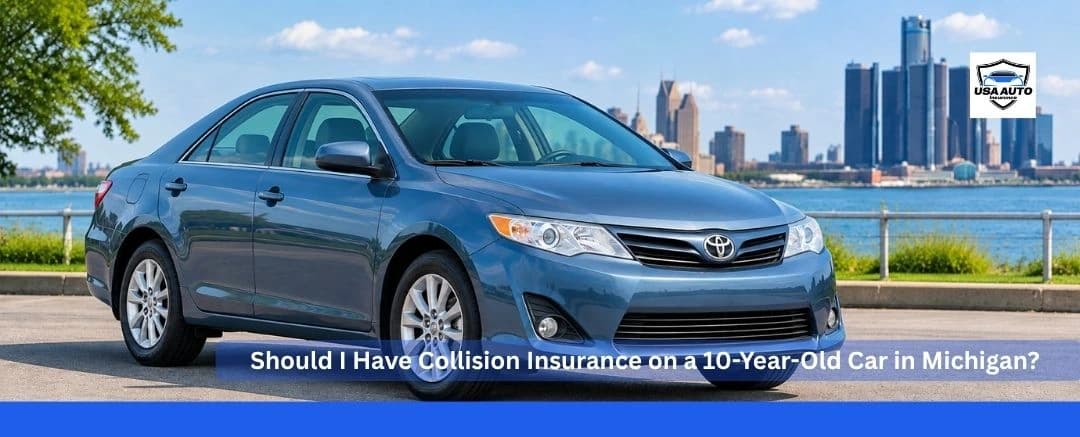
Should I Have Collision Insurance on a 10-Year-Old Car in Michigan?
Yes, you may still want collision insurance on a 10-year-old car in Michigan. The vehicle's age alone does not determine whether the coverage is worth keeping.

Does Car Insurance Cover Tornado Damage in Michigan?
Yes, car insurance can cover tornado damage in Michigan if you have comprehensive coverage. This optional coverage generally protects your vehicle from covered losses that do not result from a collision.

Can You Get Temporary Car Insurance?
Yes, you can get coverage for short-term driving needs, but probably not in the way you expect.
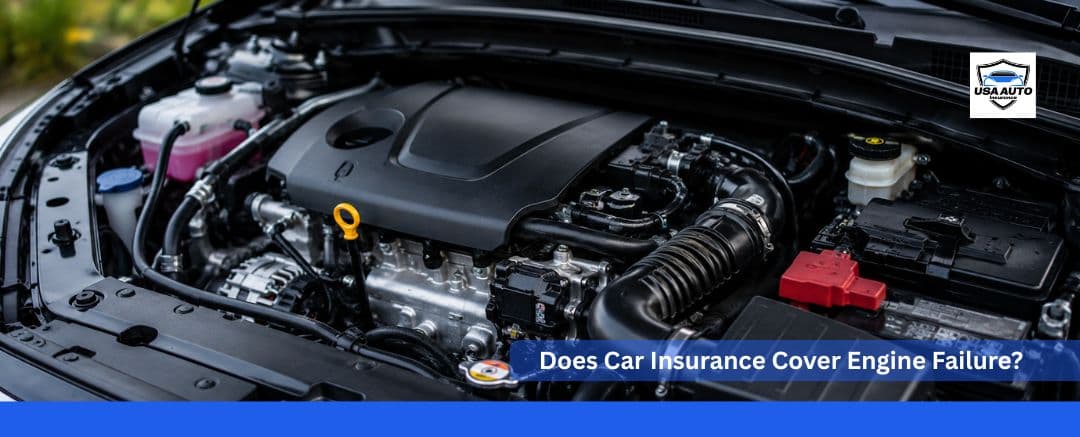
Does Car Insurance Cover Engine Failure?
Generally, no. Standard auto insurance doesn't cover engine failure caused by mechanical breakdown, normal wear and tear, or poor maintenance.
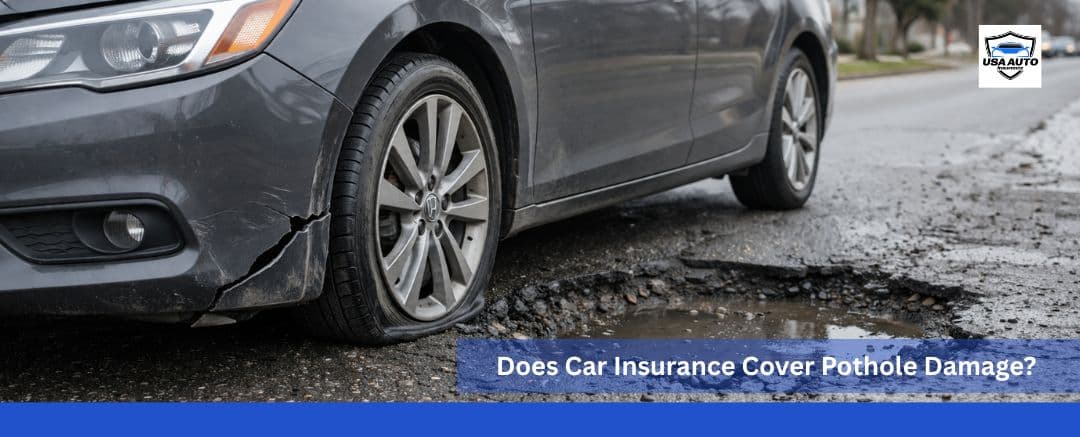
Does Car Insurance Cover Pothole Damage?
Car insurance can cover pothole damage, but it depends on the type of coverage you have. In most cases, collision coverage helps pay for repairs if your vehicle is damaged after hitting a pothole.

USA Auto Insurance
USA Auto is a licensed Managing General Agent (MGA) providing auto insurance policies underwritten by USA Underwriters Insurance Company.
Support
Copyright © USA Auto
Built by Neutrix | Powered by Neutrix Systems