January 15, 2026
Car Insurance Coverage
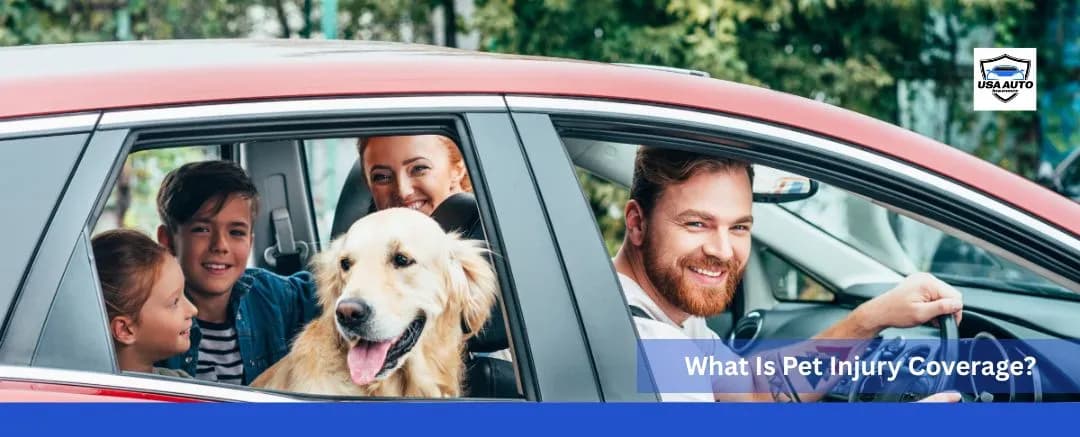
What Is Pet Injury Coverage?
Pets face real risks around vehicles every day. Not just on highways, but in driveways, parking lots, and short neighborhood trips. A pet is injured far more often than most owners expect, and many of these incidents happen without a major car accident.
Between 2023 and 2024, more than 1.8 million insurance claims were filed for animal collisions in the U.S. Dogs ranked as the third most commonly involved animal, after deer and rodents.
IIHS Fatal crashes involving animals have also increased over time, rising from 89 deaths in 1975 to 235 in 2023. Michigan remains one of the highest-risk states for these collisions, reporting 19 deaths in 2023.
Impact crashes are only part of the story. Pets are often injured in an accident when they ride unrestrained, fall from open windows or pickup truck beds, or become trapped inside hot vehicles.
In some cases, pets are stolen, kidnapped from cars, or trapped in trunks or submerged vehicles. According to American Humane, around 100,000 dogs die each year from falling or being ejected while riding in truck beds, often at low speeds.
When these events happen, the result is usually the same. An emergency visit to a veterinarian, rising veterinary bills, and confusion about what insurance coverages apply. That uncertainty is exactly why Pet Injury Coverage exists and why understanding how it works matters before an emergency, not after.
What Is Pet Injury Coverage?
Pet Injury Coverage is a form of car insurance protection designed to help with costs when your pet is injured in a crash while riding in your vehicle. It is not a full pet insurance plan. Instead, it’s an endorsement or add-on tied to your auto policy, often linked with collision coverage.
Some insurance companies include this benefit automatically when you buy collision coverage or comprehensive coverage. Others offer it as an optional pet injury add-on or pet injury endorsement you can choose at signing or renewal.
This coverage applies mainly to dogs and cats hurt in a crash. It helps pay veterinary bills and, in some cases, funeral or memorial costs if the animal doesn’t survive. Limits vary by insurer and are typically modest compared to standalone pet insurance.
Because pets are legally considered property by most U.S. insurers, basic auto insurance policies don’t cover their medical costs after a wreck unless you have this specific add-on or endorsement.
What Pet Injury Coverage Usually Pays For
When a pet is injured in a car accident, Pet Injury Coverage helps with immediate, accident-related medical costs.
In most cases, this insurance coverage applies only when the injury is directly tied to a covered accident. Coverage is usually limited to dogs and cats, and reimbursement is capped by your policy limits.
Here’s what this coverage usually pays for:
- Emergency exams and stabilization by a veterinarian
- Diagnostic testing, such as X-rays or imaging, related to the injury
- Surgery or urgent treatment when a pet is injured in an accident
- Medication needed immediately after car accidents
- In some policies, end-of-life or humane euthanasia costs
Because limits are modest, Pet Injury Coverage is designed to cover the cost of urgent care. It does not replace full pet insurance or ongoing treatment plans.
Next, we’ll look at what this coverage does not pay for, which is just as important.
What Isn’t Covered by Pet Injury Car Insurance
Pet Injury Coverage is narrow by design. It helps after a car accident, but it does not provide full insurance coverage for your pet’s overall health.
Most policies exclude any condition that is not directly caused by an accident. That means everyday care and long-term treatment are outside the scope of this insurance coverage.
What Pet Injury Car Insurance usually does not cover includes:
- Illness, disease, or age-related health problems
- Pre-existing conditions, even if symptoms worsen after a crash
- Routine or preventative care, such as vaccines or checkups
- Long-term rehabilitation or ongoing treatment after the initial injury
- Injuries that occur outside a car accident, including at home or in public spaces
In short, this coverage responds to emergencies only. If your pet needs ongoing care or broader protection, you need a standalone pet insurance plan.
Pet Injury Coverage vs Pet Insurance
These two options protect pets in very different ways. Understanding the difference helps you avoid gaps after an accident.
Pet Injury Coverage is tied to car insurance. It applies only when a pet is injured in a car accident. Pet insurance is a separate insurance policy that focuses on your pet’s ongoing health.
Here’s a simple comparison:
Feature | Pet Injury Coverage | Standard Pet Insurance |
Type of coverage | Auto policy add-on or endorsement | Standalone pet insurance plan |
When it applies | Car accidents only | Accidents and sometimes illness |
Covered animals | Usually, dogs and cats | Varies by pet insurer |
What it pays for | Emergency veterinary bills | Broader health care |
Coverage limits | Low and capped | Higher, based on plan |
Preventative care | No | Sometimes |
Pro Tip: Opt for both policies to prevent unexpected gaps in coverage and guarantee complete financial protection for your beloved pet.
How Much Coverage Do You Usually Get?
Most insurance companies that offer Pet Injury Coverage set relatively low limits. According to the insurance comparison site The Zebra, coverage limits commonly fall between $1,000 and $2,000 per accident.
At first glance, that amount may seem reasonable. However, costs add up fast once a pet is injured. An emergency exam, imaging, and overnight monitoring by a veterinarian can quickly consume most of that limit. In more serious car accidents, especially when hospitalization or surgery is required, the maximum payout can be reached within hours.
It’s also important to note how this insurance coverage is structured. Some insurers include pet protection automatically with collision coverage or comprehensive coverage. Others require a separate pet injury add-on or pet injury endorsement. In most cases, reimbursement is capped per incident, not per year.
Because limits are fixed, Pet Injury Coverage works best as short-term financial relief. It helps cover the cost of immediate care. However, it is not designed to manage extensive health treatment or repeated accidents.
How Much Does Pet Injury Car Insurance Coverage Cost?
Adding Pet Injury Coverage to your car insurance policy usually costs a small amount. Because it is an endorsement or pet injury add-on, the price is often low compared with standalone pet insurance plans.
For most drivers, the extra premium ranges from about $10 to $30 per year. Some insurance companies include this coverage automatically when you have collision coverage or comprehensive coverage already. In those cases, you may not pay anything extra. Other insurers let you choose it as an optional endorsement for a slight fee.
The final cost depends on factors such as:
- Your overall car insurance profile
- The state where you live, including Michigan risk factors
- The insurer you choose
- Whether the coverage is bundled with collision or comprehensive plans
Because limits tend to be modest, many drivers see this as affordable backup protection for emergency veterinary bills. Still, it’s important to compare pricing and benefits from multiple carriers. A low cost doesn’t always mean the coverage fits your needs, especially if your pet rides in the car often.
What to Do Immediately If Your Pet Is Injured in a Car Accident
When a pet is injured in a car accident, the first few minutes matter. Acting calmly and quickly can reduce further injury and help protect your insurance claim later.
First, focus on safety. Move out of traffic if possible. Turn on hazard lights. Keep your pet restrained, even if they seem calm. An injured animal may bite or panic because of pain.
Next, check your pet’s condition. Look for bleeding, trouble breathing, or signs of shock. If your pet is injured, seek emergency care from a veterinarian right away. Do not wait to see if symptoms improve. Internal injuries are common after car accidents.
Then document everything. Take photos of the crash scene, your pet, and any visible injury. Keep all medical records and veterinary bills. These documents are critical for reimbursement under your insurance policy.
Finally, report the accident to your car insurance provider as soon as possible. Ask whether Pet Injury Coverage applies and what steps are required to file a claim. Clear communication early helps avoid delays when you need support most.
How to Check If Your Policy Includes Pet Injury Coverage
Many drivers assume this coverage is automatic. In reality, it varies by auto insurance company and insurance policy. That’s why checking before a car accident matters.
Start with your declarations page. Look for language tied to Pet Injury Coverage, a pet injury endorsement, or a pet injury add-on. Some insurers list it under collision coverage or group it with other optional insurance coverages.
If it’s not clear, contact your car insurance agent or insurer directly. Ask specific questions. Confirm whether the coverage applies only to car accidents, which animals are eligible, and whether collision or comprehensive coverage must be active for it to apply.
Also, ask about limits and reimbursement rules. Knowing how much the policy will cover and what documentation is required helps avoid surprises later.
A quick review now can save time, money, and stress when your pet is injured and decisions need to be made fast.
Is Pet Injury Coverage Worth It?
Yes. Especially if you’re among the roughly 94 million U.S. households that own at least one pet, according to the American Pet Products Association (APPA). It’s an even stronger yes if your pet rides in the car often.
Pet Injury Coverage is surprisingly inexpensive and can help cover the cost of emergency veterinary bills after a car accident. When a pet is injured, even basic treatment can add up quickly. This coverage reduces immediate financial pressure.
However, it isn’t worth considering if you expect full protection. Please note that this is not a replacement for pet insurance. Coverage limits are low. It applies only to accidents, not illness, health conditions, or routine care.
In short, this coverage works best as backup protection. It fills a gap in car insurance when an accident happens. For broader injury coverage and ongoing care, a separate pet insurance plan is still necessary.
Pet Injury Auto Insurance Endorsement FAQs
Does car insurance cover pet injuries?
Usually no. Standard car insurance does not cover a pet injury. Coverage applies only if your policy includes Pet Injury Coverage, a pet injury endorsement, or a similar add-on. Some insurance companies include it automatically with collision coverage or comprehensive coverage, but many do not. You must check your insurance policy to be sure.
Who pays for injuries to my pet if I’m not at fault in the accident?
Typically, the at-fault driver’s insurance. If another driver caused the car accident, their liability insurance may cover the cost of your pet’s injuries, because pets are usually treated as property. If that coverage is denied or insufficient, your own Pet Injury Coverage may provide reimbursement, depending on your policy terms.
Does liability auto insurance cover pet injuries?
Sometimes, but only in specific situations. Liability auto insurance can cover pet injuries if your pet was harmed due to another driver’s fault and you file a third-party claim. However, your own liability coverage does not pay for injuries to your own pet. For that, you need Pet Injury Coverage or a separate pet insurance plan.
Tag :
auto insurance
Latest Blog
Does Car Insurance Cover Vandalism?
Yes, car insurance does cover vandalism, but only if you have comprehensive coverage. If you just have the basic liability coverage, your auto insurance policy won’t cover your car’s repair or replacement costs caused by vandalism.
What is a Deductible in Car Insurance?
A deductible in car insurance is the amount you agree to pay out of pocket toward a covered claim before your insurance provider pays the remaining costs.
Should I Have Collision Insurance on a 10-Year-Old Car in Michigan?
Yes, you may still want collision insurance on a 10-year-old car in Michigan. The vehicle's age alone does not determine whether the coverage is worth keeping.
Does Car Insurance Cover Tornado Damage in Michigan?
Yes, car insurance can cover tornado damage in Michigan if you have comprehensive coverage. This optional coverage generally protects your vehicle from covered losses that do not result from a collision.
Can You Get Temporary Car Insurance?
Yes, you can get coverage for short-term driving needs, but probably not in the way you expect.
Does Car Insurance Cover Engine Failure?
Generally, no. Standard auto insurance doesn't cover engine failure caused by mechanical breakdown, normal wear and tear, or poor maintenance.

USA Auto Insurance
USA Auto is a licensed Managing General Agent (MGA) providing auto insurance policies underwritten by USA Underwriters Insurance Company.
Support
Copyright © USA Auto
Built by Neutrix | Powered by Neutrix Systems