March 12, 2026
Car Insurance Coverage
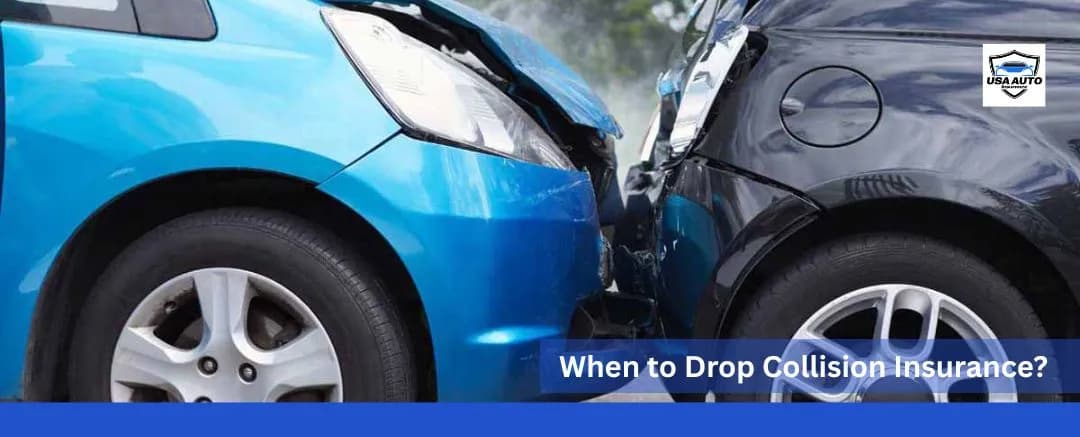
When to Drop Collision Insurance?
If you’re struggling to afford car insurance, it might be a good idea to review your policy and remove optional auto insurance coverage that you don’t need anymore. While collision coverage provides valuable protection, it only covers accidental crashes. So, if you’re in a situation where you can’t temporarily drive for a certain time or you don’t drive at all, collision coverage may not be necessary.
More importantly, if you own a car that has significantly depreciated, and if your car’s actual cash value is almost equal to your deductible, from a financial standpoint, it would be more feasible to drop your collision coverage.
Before deciding whether you should drop collision coverage, it’s important to determine if you need it or if it’s an extra coverage that’s costing you a significant amount on your premiums.
So, to help you make an informed decision, this guide covers:
- When you should drop collision coverage
- When you shouldn’t drop collision coverage
- How much you can save by dropping collision coverage
Is Collision Insurance Required?
No, collision coverage isn’t legally mandatory; it’s an optional coverage that protects your car by covering its repair or replacement in the event of an accidental crash. However, if you’re financing a car on a loan or lease, then your lender may require you to have collision coverage.
Apart from that, if you consider your own financial safety, collision coverage is an important coverage as it can help you cover expensive repairs, or a total car replacement based on your car’s actual cash value, up to your coverage limit after the deductibles are paid.
If high premiums are the main reason you’re considering dropping collision coverage, you may want to compare quotes for affordable car insurance coverage from a reliable insurance provider before removing the coverage altogether. In some cases, adjusting your deductible or switching insurers can lower your premium without increasing your financial risk.
When Should You Drop Collision Insurance?
Dropping collision coverage isn’t just about cutting costs; it’s about evaluating whether the protection still justifies its price. In most cases, the decision depends on your car’s value, your deductible, your annual premium, and how frequently the car is driven.
While collision coverage helps pay for damage to your vehicle after an accident, there are situations where the cost of maintaining it may outweigh the financial benefit. Let’s explore each of these situations when you should drop collision coverage.
Your Car Is 8 to 10+ Years Old and Has Significantly Depreciated
With each passing year, your car’s value steadily declines due to depreciation, along with gradual wear and tear. If you have an old car that’s 8, or more than 10 years old, it has already lost a substantial portion of its original value.
As collision coverage pays based on your car’s actual cash value (ACV), the potential payout becomes smaller as your car depreciates. After subtracting your deductible, the remaining benefit may be limited, especially if the car’s overall value is already low.
In these situations, continuing to pay collision premiums may no longer provide meaningful financial protection. If your car has lost most of its value, the cost of maintaining collision coverage could outweigh the potential payout in the event of an accident.
The Cost of Coverage Exceeds 10% of Your Car’s Value
You may consider dropping car insurance if the cost of collision coverage is more than 10% of your car’s value, and here’s why. When the annual premium for collision coverage represents a significant percentage of your vehicle’s actual cash value (ACV), you may end up paying more in premiums over time than the maximum benefit you could receive after a claim.
For example, suppose your car is worth $4,000, and your collision coverage costs $500 per year; this means that your premium is equal to 12.5% of your car’s value annually. If you keep the coverage for three years without filing a claim, you would have paid $1,500 in premiums.
Now factor in a $1,000 deductible. In the event of a total loss, the maximum payout would be roughly $3,000 ($4,000 ACV minus $1,000 deductible). After just a few years of premiums, a significant portion of the potential payout would already be offset by what you’ve paid for coverage.
Your Car’s Actual Cash Value is Almost Equal to or Lower than Your Deductibles
If your car’s actual cash value is almost equal to or even lower than your deductible, then the premiums that you’re paying for collision coverage may not be worth it.
Collision coverage pays out based on your vehicle’s actual cash value (ACV) minus your deductible. When the car’s value is very low, the amount you would actually receive after a claim can be minimal or, in some cases, nothing at all.
For example, suppose your car is worth $1,200, and your collision deductible is $1,000. If the vehicle is declared a total loss after an accident, the maximum payout would be around $200 ($1,200 ACV minus $1,000 deductible).
Now imagine you’re paying $350 per year for collision coverage. In just one year, you would have paid more in premiums than the maximum amount you could recover from a claim.
Over two years, the total premium paid would far exceed the potential payout. In situations like this, maintaining collision coverage may provide little to no financial benefit, especially if you could afford to replace the vehicle out of pocket.
You No Longer Drive the Car
If you’re not driving your car, and if it’s safely parked in your garage, then you may not require collision coverage at all. Typically, the collision coverage only applies when your car gets damaged in an accidental collision.
So, if you’re not driving, it beats the entire purpose of having collision coverage in the first place, which also means you’re overinsured. On the other hand, if you’re not driving temporarily due to extreme weather conditions, health issues, or if you’re traveling, you can just opt for comprehensive-only coverage and later add it back to your policy when you start driving again.
This can lower your premium while still protecting the vehicle against non-collision risks such as theft, vandalism, or weather damage. Before making changes, it’s important to confirm that the vehicle is properly stored and that any adjustments comply with your lender’s or insurer’s requirements.
The Car Is Stored Long-Term or Rarely Used
If your car is stored in a garage or parking space for several months or even longer, maintaining collision coverage may not always be necessary. As collision coverage only applies when the car is involved in an accidental collision with another vehicle or object, the risk of a claim decreases significantly when your car remains off public roads.
If you drive the car only occasionally, you still face some accident risks, but that risk may be relatively low. In that case, you should decide whether the annual collision premium is justified based on how infrequently you use the vehicle. When usage is minimal, the cost of coverage may outweigh the potential benefits.
You Mostly Drive Another Vehicle
If you’re mostly driving another vehicle, you may want to reconsider keeping collision coverage for the car that you rarely drive. When a car stays parked most of the time, the chances of getting into an accident naturally decrease, so driving it less often reduces the potential utility of collision coverage.
For example, if you own two cars but use one every day and only drive the other a few times a month, the second car may not justify the premium spent on collision coverage. If that car is worth $4,000 and collision coverage costs $450 per year, you’re paying more than 11% of the car’s value annually for a vehicle you hardly drive.
In this case, review how often you use the car, its current value, and whether you could afford repair or replacement costs out of pocket. If the vehicle is mainly a backup and spends most of its time parked, keeping collision coverage may not be the most cost-effective option.
How Much Can You Save By Dropping Collision Coverage on Car Insurance?
If you don’t need collision coverage, you can save a significant amount on monthly or annual premiums. On average, collision coverage costs between $289 and $800 per year, based on data from industry sources such as Bankrate and Business Insider.
So, by dropping collision coverage, you can potentially save $250 to $800, or more. The average cost of car insurance for full coverage is $2,700 per year. So, based on that, let’s say you save $400 by dropping car insurance; this means you would have to pay $2,300 on your yearly premiums, which represents a 15% reduction in your total car insurance cost.
However, these savings come with trade-offs. By removing collision coverage, you would be responsible for paying repair or replacement costs out of pocket if your vehicle is damaged in an accident. Before making a decision, compare the annual savings to your car’s current value and your ability to absorb potential losses.
When Should You Not Drop Collision Coverage?
Dropping collision coverage shifts the financial risk of an accident entirely to you. While it can reduce your premium, it may leave you responsible for costly repairs or even replacing your vehicle out of pocket.
In some situations, especially if your car is financed, keeping collision coverage may not only be financially wise but contractually required. Let’s explore situations when you shouldn’t drop collision coverage.
You’re Financing the Car on a Loan
If you’re financing your car through a loan, your lender will typically require you to carry collision coverage until the loan is fully paid off. This protects the lender’s financial interest in the vehicle, since the car serves as collateral for the loan.
If you drop collision coverage while the loan is active, you could violate your loan agreement. In some cases, the lender may add force-placed insurance to your policy, which is often more expensive and provides limited protection. Until you own the car outright, maintaining collision coverage is usually mandatory, not optional, as you’re obligated by contract.
You Drive in a High-Traffic or High-Accident Area
If you regularly drive in areas with heavy traffic, frequent congestion, or higher accident rates, your risk of being involved in a collision increases. Even cautious drivers can face a greater chance of accidents simply due to road conditions and traffic density.
In these situations, keeping collision coverage may provide important financial protection, as repair costs after an accident can be significant. Dropping coverage in a high-risk driving environment could leave you exposed to substantial out-of-pocket expenses.
You Have a Poor Driving Record
If you have a history of accidents, traffic violations, or insurance claims, your likelihood of being involved in another collision may be higher. A poor driving record can increase your overall risk of exposure, even if you drive less frequently.
In this situation, keeping collision coverage may offer essential financial protection. Dropping it could leave you responsible for significant repair or replacement costs if another accident occurs.
Your Car Has a High Repair Cost
If your car is expensive to repair, keeping collision coverage may be financially wise. Modern cars, especially SUVs, luxury models, and electric cars, often have complex components that can drive repair costs much higher after an accident.
According to ConsumerAffairs, some of the most expensive unexpected repairs include:
- Engine replacement: $5,000 to $10,000 or more
- Transmission replacement: $3,000 to $9,000 or more
- EV battery replacement: $4,000 to $18,000
- Head gasket replacement: $3,000 to $5,500
- Transfer case replacement: $2,000 to $8,000
- Catalytic converter replacement: $900 to $4,500
- Airbag replacement: $1,000 to $2,000
Even mid-level repairs can add up quickly:
- Alternator replacement: $450 to $2,500
- Radiator replacement: $750 to $1,850
- Fuel pump replacement: $900 to $1,100
After a moderate collision, multiple components may need repair or replacement at the same time. For example, if an accident damages the transmission at $6,000, deploys airbags costing $1,500, and requires radiator replacement at $1,200, the total repair bill could exceed $8,000 to $10,000, not including additional labor or hidden structural damage.
If you don’t carry collision coverage, you would need to pay these expenses out of pocket. For cars with high repair complexity or costly components, maintaining collision coverage can help protect you from substantial financial loss.
The Bottom Line: Is it Better to Drop or Keep Collision Coverage?
Whether you should drop or keep collision coverage ultimately depends on your car’s value, the cost of coverage, your deductible, and your ability to afford repairs out of pocket. If you fully own an old car with low actual cash value, or if you don’t drive it and keep it parked, it’s financially more feasible to drop collision coverage.
However, if you’re financing it on loan, and if you drive your car either occasionally or regularly in a high-traffic area, then it’s better to have collision coverage, especially if it’s a classic car, or an expensive sports car.
On the other hand, if you’re shopping for car insurance or switching insurers and need help deciding whether to keep or remove collision coverage, you can contact us for expert guidance and a free quote.
FAQs on When to Drop Collision Insurance
Should I have collision insurance on a 10-year-old car?
It depends on your car’s current value, your deductible, and how much you pay for collision coverage. By the time a car is 10 years old, it has usually lost a significant portion of its value, which means the potential payout after a claim may be limited.
If the annual cost of collision coverage is high relative to your car’s value, or if the deductible is close to the car’s actual cash value, keeping it may not be cost-effective. However, if you couldn’t afford to repair or replace the car out of pocket, maintaining collision coverage may still provide important financial protection.
At what point does collision insurance stop being beneficial for a consumer?
Collision insurance may stop being beneficial when the cost of coverage is high compared to your car’s value. If your vehicle has significantly depreciated, your deductible is close to its actual cash value, or the annual premium exceeds a reasonable percentage of the car’s worth, the financial benefit becomes limited.
At that point, you may end up paying more in premiums over time than you could realistically receive from a claim, especially if you can afford to cover repair or replacement costs out of pocket.
When should I cancel collision coverage?
You may consider canceling collision coverage when your car has significantly depreciated, the annual premium is high compared to its value, or your deductible is close to the vehicle’s actual cash value. It may also make sense if you fully own the car and can afford to pay for repairs or replacement out of pocket.
What is the 10 rule for collision insurance?
The 10% rule suggests that collision coverage may not be cost-effective if the annual premium equals or exceeds 10% of your car’s actual cash value.
For example, if your car is worth $4,000 and collision coverage costs $450 per year, you’re paying more than 10% of the car’s value annually. In such cases, you may end up paying a large portion of the vehicle’s value in premiums over time, which can reduce the overall financial benefit of keeping the coverage.
Is it worth keeping collision coverage?
Keeping collision coverage is worth it if your car has significant value, is financed, or would be expensive to repair or replace out of pocket. It can provide important financial protection if you’re involved in an accident.
However, if your car has depreciated substantially and the annual premium is high compared to its value, keeping collision coverage may not be cost-effective. The decision ultimately depends on your car’s value, your deductible, and your ability to afford repair costs out of pocket.
Tag :
auto insurance
Latest Blog
Does Car Insurance Cover Vandalism?
Yes, car insurance does cover vandalism, but only if you have comprehensive coverage. If you just have the basic liability coverage, your auto insurance policy won’t cover your car’s repair or replacement costs caused by vandalism.
What is a Deductible in Car Insurance?
A deductible in car insurance is the amount you agree to pay out of pocket toward a covered claim before your insurance provider pays the remaining costs.
Should I Have Collision Insurance on a 10-Year-Old Car in Michigan?
Yes, you may still want collision insurance on a 10-year-old car in Michigan. The vehicle's age alone does not determine whether the coverage is worth keeping.

Does Car Insurance Cover Tornado Damage in Michigan?
Yes, car insurance can cover tornado damage in Michigan if you have comprehensive coverage. This optional coverage generally protects your vehicle from covered losses that do not result from a collision.
Can You Get Temporary Car Insurance?
Yes, you can get coverage for short-term driving needs, but probably not in the way you expect.
Does Car Insurance Cover Engine Failure?
Generally, no. Standard auto insurance doesn't cover engine failure caused by mechanical breakdown, normal wear and tear, or poor maintenance.

USA Auto Insurance
USA Auto is a licensed Managing General Agent (MGA) providing auto insurance policies underwritten by USA Underwriters Insurance Company.
Support
Copyright © USA Auto
Built by Neutrix | Powered by Neutrix Systems