December 7, 2025
Car Insurance Coverage
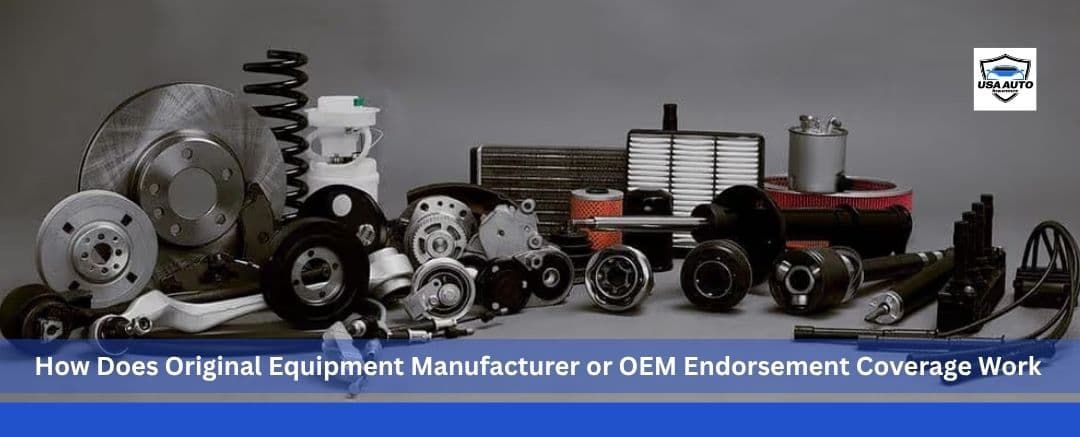
How Does Original Equipment Manufacturer or OEM Endorsement Coverage Work
Let’s say you’ve purchased an auto policy from USA Auto. After a few months, you’re involved in an accident, and your vehicle ends up in the repair shop needing parts replacement. If you’ve already added original parts replacement or OEM coverage to your auto insurance policy, the repair shop is authorized to use only original parts made by your vehicle’s manufacturer. If you haven’t added this coverage, your insurance carriers will typically approve aftermarket parts to reduce costs.
So, the process is straightforward. After an accident, when you file a claim, the insurance company sends an adjuster to assess the damage to your vehicle. If you have OEM coverage, the repair estimate automatically includes OEM parts instead of generic ones. You’ll still pay your deductible, as you would for most claims, and your insurer will cover the remaining costs up to your specific car insurance limits.
Why Original Parts Replacement or OEM Coverage Is Important?
Original parts replacement coverage matters because it protects your car's safety, performance, and value. When your vehicle is repaired with original equipment manufacturer (OEM) parts, it fits and functions exactly as it did before the accident.
So, having this coverage means you don’t have to worry about mismatched panels, lower-quality materials, or the risk of voiding your warranty. It also helps maintain your car’s resale value and long-term reliability. Additionally, it fills you with confidence that your insurance company will restore your vehicle to factory standards.
If you need affordable car insurance with an OEM endorsement, contact USA Auto for an instant auto insurance quote. You can speak with our agent or call our customer service at (866) 855-1872 anytime you need.
What If Original Equipment Manufacturer (OEM) Parts Aren’t Available?
If original parts aren’t available, your insurance carrier will look for the next best option. They might use reconditioned, used OEM, or high-quality aftermarket parts that meet safety and performance standards.
Genuine parts can sometimes be on backorder, discontinued, or too expensive for certain vehicle models. That’s why insurers choose to go with alternatives.
Additionally, most auto insurance policies include a written clause or contract that allows the use of substitute parts when OEM components cannot be sourced within a reasonable time.
So, if you’re concerned about what your insurer will do if original parts aren’t available, contact your insurance agent or company. They can help you understand what your policy covers.
If it’s taking too long to acquire the original parts, or if they’re too costly, you can request your insurer to wait for them or offer to pay the difference to have them installed.
What Is the Difference Between OEM and Aftermarket Parts?
When repairing your car, you’ll often have two choices: OEM parts or aftermarket parts. Original Equipment Manufacturer (OEM) parts come directly from your vehicle’s maker and are designed to match your car’s exact specifications. Aftermarket parts (AKA alternative parts), on the other hand, are made with third-party companies that aren’t affiliated with the automaker.
Although OEM parts offer peace of mind and reliability to drivers, the aftermarket parts also have higher standards. The Certified Automotive Parts Association (CAPA) sets strict standards to ensure aftermarket parts meet safety and quality benchmarks. These parts can cost up to 50% less than their OEM counterparts and save consumers more than $2.2 billion each year, according to the National Association of Mutual Insurance Companies.
Consequently, this lower cost of repairs can reduce insurance claim expenses and help stabilize your auto insurance premiums. Still, many drivers prefer OEM coverage as they trust the fit, finish, and warranty protection.
The popularity of OEM parts is also high because many drivers worry that aftermarket parts might void a vehicle's warranty, which isn’t true. It’s a misconception. Magnuson-Moss Warranty Act prevents manufacturers from denying coverage solely for using non-OEM parts.
Comparing OEM Parts Vs. Aftermarket Parts
Here's a table illustrating the differences between OEM parts and aftermarket parts:
OEM Parts | Aftermarket Parts |
Made by the original equipment manufacturer | Made by independent third-party companies |
Guaranteed fit consistent quality | Quality varies by maker and may require adjustment |
The price is higher | Up to 50% cheaper |
You’ll get the manufacturer's warranty | Covered by the maker or retailer, cannot void vehicle warranty under the Magnus-Moss Act |
Not always available, sometimes limited or delayed | Widely available through multiple suppliers |
Increases repair cost, may raise premium | Lowers insurer costs, can help reduce car insurance rates |
Feels factory-new, so you’ll have peace of mind | Budget-friendly, it may lack OEM-level assurance |
When Do I Need Original Parts Replacement or OEM Insurance?
You should add OEM endorsement/Original Parts Replacement Coverage if you rely on your car every day and want it to stay as reliable as the day you bought it. It gives you confidence and peace of mind knowing your favorite car is repaired with original parts made by the same company that built it.
In fact, the use of OEM coverage ensures your vehicle’s performance, safety, and resale value aren’t compromised even after an accident. Here’s when it makes the most sense to have Original Parts Replacement Coverage:
- You Drive Often: Long commutes, business trips, or family travel mean more miles and higher repair needs.
- Your Car Is New or Still Under Warranty: Cars repaired with factory parts tend to hold their worth better.
- You Prioritize Safety: OEM parts maintain the same crash protection your vehicle had when it left the factory.
Pro Tip: If you're on a budget, aftermarket parts are a feasible option. They're more affordable, and contrary to popular belief, not necessarily unreliable.
What Cars Can Get OEM Insurance Coverage?
Most newer vehicles qualify for Original Parts Replacement Coverage. Especially, if your car is still under warranty, you’re most likely to get OEM easily. Many insurance companies limit OEM coverage to cars within the last five to ten model years because older vehicles may not have available factory parts.
You’re more likely to get this coverage if:
- Your car is new or recently purchased
- It’s a luxury, hybrid, or electric vehicle
- You already have collision and comprehensive insurance
- If you’re leasing your car (As some lease agreements mandate using OEM parts)
How Much Does OEM/OPR Coverage Cost?
The cost of original parts replacement coverage depends on your car’s make, model, and age, as well as your insurance company and where you live. On average, OEM coverage can cost you between $5 and $20 per month.
However, you might pay a bit more if you drive a newer or luxury car since OEM parts cost more to replace. If you don’t have a budget issue and drive a high-value vehicle, paying a few extra dollars could be a valuable investment.
Is OEM Parts Coverage Worth It?
Without a doubt, it is worth it. If you drive a high-end vehicle and care about the car’s quality, safety, and long-term value, original parts replacement coverage is absolutely worth considering. It guarantees that your repairs use original equipment manufacturer (OEM) parts instead of lower-cost aftermarket parts, which might not fit or perform as well.
On the other hand, if your vehicle is more than 10 years old or has a low market value, aftermarket parts may suffice. In that case, investing in OEM coverage might not be a sensible decision.
Original Parts Replacement Insurance Coverage FAQs
Does auto insurance cover new OEM auto parts?
Yes, but not automatically. If you have purchased OEM or original parts replacement coverage, your auto insurance will use new OEM parts while repairing your vehicle after a covered incident.
Does insurance cover windshield OEM?
Yes, some auto insurance policies with original parts replacement coverage cover OEM windshields. It ensures your car gets a factory-made windshield that matches the original strength, clarity, and safety standards.
Can an insurance company refuse to pay for OEM parts?
Yes, your insurance company can do so for several valid reasons. If the accident isn’t a covered incident, if you don’t have OEM coverage, or if OEM parts are unavailable or taking too long to acquire, they may simply use aftermarket parts approved by CAPA.
Who pays when a rock hits your windshield?
Your insurance company will pay for windshield damage caused by a rock as long as you have comprehensive coverage. But whether you’ll get an OEM windshield or not depends on your insurer.
Can I buy original parts replacement coverage in Michigan?
Yes, most insurance companies in Michigan offer Original Parts Replacement Coverage as an optional add-on. It’s available through major insurers when you already carry comprehensive and collision auto insurance.
Can I request OEM parts from my insurer after an accident?
Yes, you can certainly request OEM parts. However, whether your insurer will approve the request depends on your insurance policy. Unless you have an OEM endorsement, your request might be denied. That said, there’s another way to obtain OEM parts through your insurer. You can pay the difference between the cost of the aftermarket parts your insurer intends to use and the cost of the OEM parts you prefer.
For instance, if the aftermarket parts cost $250 and the OEM parts you request cost $400, you would pay the $150 difference to have your vehicle repaired with the OEM parts. Many insurers may approve this option if you strongly prefer original parts.
Are there aftermarket parts laws by state?
Yes, many states regulate how aftermarket parts are used and disclosed in repairs. Some states may even require insurers to notify policyholders before using non-OEM parts. For instance, in Michigan, repair shops must disclose if aftermarket parts are used and include a written notice stating they’re not made by your car’s manufacturer.
Tag :
auto insurance
Latest Blog

Does Car Insurance Cover Vandalism?
Yes, car insurance does cover vandalism, but only if you have comprehensive coverage. If you just have the basic liability coverage, your auto insurance policy won’t cover your car’s repair or replacement costs caused by vandalism.
What is a Deductible in Car Insurance?
A deductible in car insurance is the amount you agree to pay out of pocket toward a covered claim before your insurance provider pays the remaining costs.
Should I Have Collision Insurance on a 10-Year-Old Car in Michigan?
Yes, you may still want collision insurance on a 10-year-old car in Michigan. The vehicle's age alone does not determine whether the coverage is worth keeping.

Does Car Insurance Cover Tornado Damage in Michigan?
Yes, car insurance can cover tornado damage in Michigan if you have comprehensive coverage. This optional coverage generally protects your vehicle from covered losses that do not result from a collision.
Can You Get Temporary Car Insurance?
Yes, you can get coverage for short-term driving needs, but probably not in the way you expect.
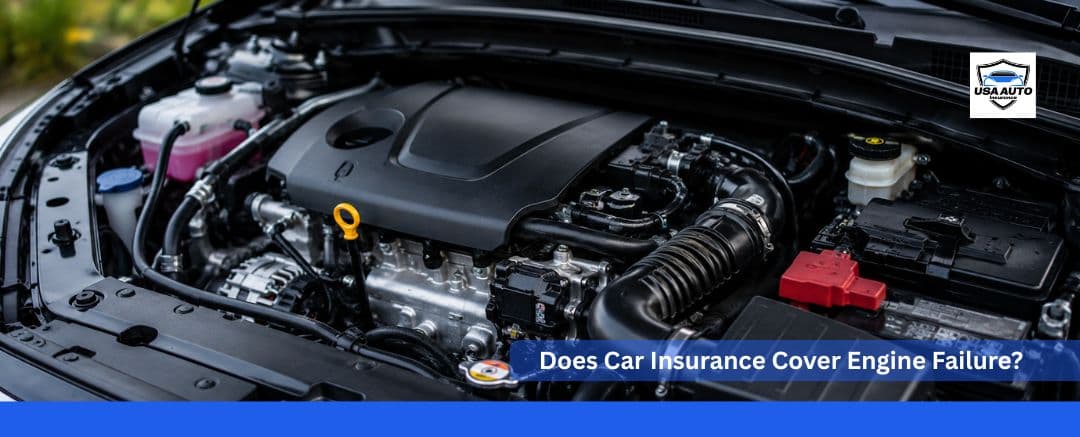
Does Car Insurance Cover Engine Failure?
Generally, no. Standard auto insurance doesn't cover engine failure caused by mechanical breakdown, normal wear and tear, or poor maintenance.

USA Auto Insurance
USA Auto is a licensed Managing General Agent (MGA) providing auto insurance policies underwritten by USA Underwriters Insurance Company.
Support
Copyright © USA Auto
Built by Neutrix | Powered by Neutrix Systems