March 9, 2026
Car Insurance Requirements
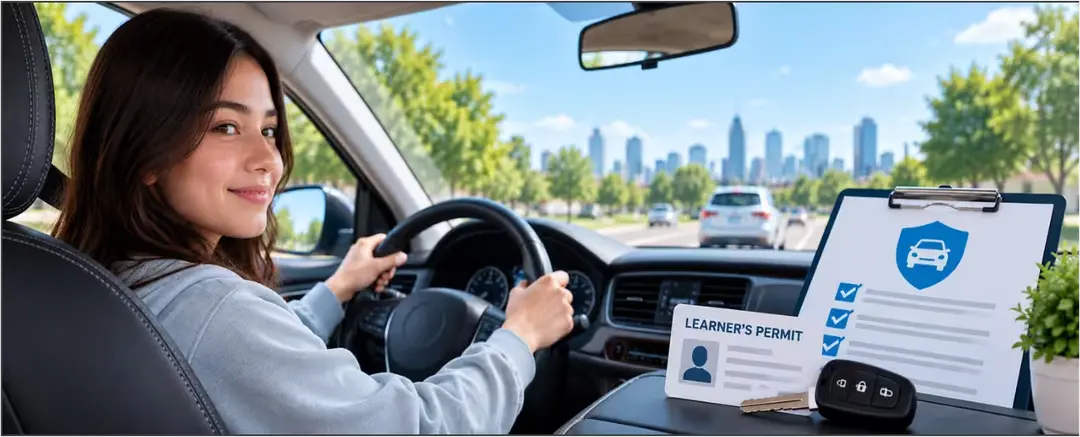
Can You Get Car Insurance with a Permit?
Yes, it's possible to get car insurance with a learner’s permit, but there are limitations, as insurers generally require a driver’s license to issue a policy. When applying for car insurance with a learner’s permit, you’re typically limited to one of two options.
- Joining a parent or household member’s auto insurance policy who has a valid driver’s license
- Purchasing your own car insurance policy, which usually requires you to be at least 18 years old and own the vehicle
In this guide, you will learn when and how you can get car insurance with a permit through an existing policy, or by purchasing a separate policy of your own.
What is a Learner’s Permit, and Who is Eligible?
A learner’s permit is a restricted or provisional license that allows new drivers to practice driving legally under supervision before obtaining a full driver’s license. Permit holders are typically required to drive with a licensed adult in the vehicle and follow additional state-imposed restrictions, such as curfews or passenger limits.
Learner’s permits are designed to help drivers gain practical experience and prepare for both the written knowledge test and the road skills test required for a full driver’s license. Supervision rules and restrictions vary by state, so it’s important to check your local Department of Motor Vehicles (DMV) guidelines.
Eligibility Requirements for a Learner’s Permit
While requirements vary by state, applicants generally must meet the following:
- Minimum Age: Usually between 14 and 16 years old, depending on the state
- Proof of Identity and Residency: Such as a birth certificate, passport, Social Security number, and proof of residence
- Parental or Guardian Consent: Required for applicants under 18
- Driver’s Education: Often mandatory for minors
- Knowledge Test: A written exam covering traffic laws and road signs
- Vision Test: To ensure you meet minimum eyesight requirements
- Application Fee: Varies by state
Do You Need Car Insurance While Learning to Drive?
Part of learning to drive involves practicing on public roads. To do so legally, you must have a valid learner’s permit or driver’s license and drive a vehicle that carries at least the minimum car insurance coverage required by your state.
However, car insurance typically follows the vehicle, not the permit holder. In most cases, learner’s permit drivers are covered under a parent’s or household member’s existing auto insurance policy. This means you usually don’t need to purchase a separate policy just to practice driving.
If you own the vehicle you’re driving, you’ll need to make sure it has an active insurance policy that meets your state’s minimum car insurance requirements. While the minimum coverage fulfills legal requirements, in most cases, it may not be adequate to provide adequate financial protection.
For broader protection, it’s worth reviewing your options with a reliable insurance provider that offers flexible and affordable auto insurance coverage tailored to your needs.
How to Get Car Insurance with a Learner’s Permit?
There are two ways to get car insurance with a learner’s permit: you can either get covered by joining an existing policy of a household member or purchase a separate car insurance policy of your own.
If you’re a minor, you need to get covered by your parent or guardian’s auto insurance policy, as you need to be at least 18 years old and above to get your own policy. Even if you’re above 18, you need to own a car to purchase a separate policy. Let’s explore how each option works and which one may apply to your situation.
Get Added to Your Parents’ or a Household Member’s Auto Insurance Policy
In most cases, learner’s permit drivers under 18 are added to a parent’s or legal guardian’s auto insurance policy. Insurers typically require minors living in the household to be listed on the existing policy once they begin driving.
If you’re 18 or older and live with family members, you may also have the option to be added to a household member’s policy, such as a spouse, relative, or even a roommate, depending on the insurer’s guidelines.
For minors, a parent or guardian will need to contact their insurance company to add you to the policy. This usually involves providing your learner’s permit information and updating the policy as follows.
Steps to Add a Minor or a Household Member to Your Auto Insurance Policy
Contact Your Insurance Provider: Call your insurer or log into your online account to inform them that you would like to add your child, or an adult household member, to your auto insurance policy.
- Provide the Permit Holder’s Information: Your insurer will require your driver’s information, which includes their full name, date of birth, learner’s permit number, and the date the permit was issued.
- Confirm Vehicle Details: You will need to provide the vehicle identification number (VIN) and car registration details to confirm the car that they will be driving.
- Adjust Coverage Choice and Limits: Make sure your current car insurance coverage meets state minimum requirements and provides adequate financial protection. Consider whether higher liability limits or additional coverage options are necessary for adequate financial protection.
- Review Premium Adjustments: Adding a minor or household permit holder will typically increase your premium. Request an updated quote and confirm when the revised rate will take effect.
- Explore Available Discounts: Ask your insurer about safe driver discounts, good student discounts, student-away-at-school discounts, or telematics programs that may help offset the premium increase.
- Update Policy Documents: Once the change is processed, review your updated declarations page to ensure that the new driver is properly listed and all information is accurate.
Purchase a Separate Car Insurance Policy (If You Own the Car)
Typically, auto insurance is tied to the vehicle, so if you own a car, you will need to purchase your own car insurance policy, whether you’re driving with a learner’s permit or a full driver’s license.
Here’s a step-by-step guide to get your own car insurance policy.
- Confirm vehicle ownership by ensuring the car is titled in your name or co-owned by you, since insurers typically require the policyholder to have an insurable interest in the vehicle.
- Gather the necessary documents, including your learner’s permit number, vehicle identification number (VIN), registration details, garaging address, and any prior driving history if applicable.
- Verify insurer eligibility requirements, as not all insurance companies issue standalone policies to learner drivers, and some may require a fully licensed driver to be listed on the policy.
- Compare quotes from multiple insurers to evaluate differences in premiums, coverage limits, deductibles, and available discounts.
- Choose appropriate coverage limits by meeting at least your state’s minimum liability requirements and considering additional protection such as collision, comprehensive, or uninsured motorist coverage.
- Ask about available discounts or savings programs, including good student discounts, bundling options, or telematics programs that may help reduce your premium.
- Review the total premium and deductible amounts carefully before finalizing the policy to ensure the coverage fits your budget.
- Complete the application and make the initial payment, since coverage generally becomes active once the policy is issued, and the first payment is processed.
- Confirm your proof of insurance and effective date by obtaining your insurance ID cards and verifying when coverage officially begins.
What Happens if You Have an Accident with a Learner’s Permit?
Typically, a learner’s permit is just a provisional license that allows you to drive under the supervision of an adult with a valid driver’s license with certain conditions. It does not provide any financial protection unless you’re covered by an auto insurance policy.
If you end up in a car accident, and if you’re uninsured, or if you don’t have adequate coverage, you will have to cover liability costs, medical expenses, and your own vehicle repair and replacement costs out of pocket.
So, depending on the severity of the accident, the expenses can range from a few hundred to even thousands of dollars, which can be financially overwhelming without adequate car insurance coverage.
If you’re a minor, financial responsibility may extend to your parents or the policyholder, especially if you were driving a household vehicle. In serious cases, you could also face legal action from other parties seeking compensation.
How Much Does It Cost to Get Car Insurance with a Learner’s Permit?
While the average cost of car insurance is $816 per year for minimum coverage, and $2,700 for full coverage, the cost can significantly increase to $5,700 or more depending on your age and other key factors.
According to Bankrate, as a parent, if you add a 16-year-old to your policy, it can cost you an average of $436 per month, or $5,229 per year, which is about $2,500 more for adding your teen. Based on the average rates, your car insurance premiums can get cheaper from the age of 19, with significant reductions after 25 and above.
However, when you’re applying with a learner’s permit even as an adult, it means you may not have much driving experience, so you may face higher premiums, depending on your location, insurer’s pricing, and personal rating factors. Similarly, if you join your parent, spouse, or roommate’s policy, their premiums may increase depending on the insurer’s policy and the adjusted rates.
Which Insurance Companies Cover Learner’s Permit Drivers?
Most major auto insurance companies allow learner drivers to be covered under an existing household policy. In many cases, permit drivers are added to a parent’s, guardian’s, or household member’s policy rather than purchasing a separate standalone policy.
However, eligibility rules vary by insurer and state. Some insurance companies may require a fully licensed driver to be listed on the policy, while others may limit standalone policies for drivers who only hold a learner’s permit.
If you’re exploring coverage options, you can compare quotes and policy guidelines from well-known insurers such as Geico, Progressive, Liberty Mutual, USA Auto, and Allstate. Each company has its own underwriting requirements, so it’s important to confirm whether they issue coverage to learner drivers in your state.
If you’re considered a high-risk driver due to age or other reasons such as recent car accidents or traffic violations, you may need to explore insurers that specialize in non-standard auto insurance.
When Do You Need a Driver’s License to Get Car Insurance?
With a learner’s permit, you’re allowed to practice driving on public roads under supervision, but that’s usually for 6 months to 12 months, depending on the state in which you’re located.
So, a learner’s permit is an alternative document that you can initially use instead of a driver’s license, but that’s just temporary. After getting your driver’s license, you will need to update your car insurance policy by including your license details as soon as you get it.
Failing to update your insurer after receiving your license could lead to rating inaccuracies or claim complications. Keep in mind that your premium may also change after becoming fully licensed, as insurers will reassess your driving status and risk profile.
Learn More: Can You Get Car Insurance Without a License?
The Bottom Line: Should You Get Car Insurance with a Learner’s Permit?
Yes, you should definitely get car insurance with a learner’s permit because you need to comply with your state’s local insurance regulations and have adequate financial protection.
If you’re caught driving without insurance, you can face legal consequences starting from a $500 fine to vehicle impoundment and even jail time. Similarly, if you get into a car accident, it can cost you significant out-of-pocket expenses if you’re uninsured.
More importantly, as you’re progressively developing your driving skills with a learner’s permit, mistakes can happen, which can even result in a minor to severe car crash. So, that’s why it’s crucial to ensure that you’re adequately insured for both legal compliance and financial protection.
If you’re on a learner’s permit or you’re exploring an auto insurance policy with essential coverage for your child, spouse, or any household member, you can contact us for expert advice to acquire coverage with a free quote.
FAQs on Car Insurance with a Learner’s Permit
How does insurance work with a learner's permit?
Car insurance typically follows the vehicle, not the learner’s permit. In most cases, drivers with a learner’s permit are covered by being added to a parent’s or household member’s existing auto insurance policy. If you own the car, you will have to purchase your own policy. Keep in mind that coverage and eligibility rules vary by insurer and state, so it’s best to confirm the terms and conditions first with your insurer.
Does having a permit affect insurance?
Yes, having a learner’s permit can affect insurance rates. Adding a learner driver to a policy may increase the premium because insurers consider new drivers to be higher risk due to limited experience.
What happens if I don't add my teenager to my car insurance?
If your teen lives in your household and drives your vehicle but isn’t listed on your policy, your insurer could deny a claim after an accident. You may also face policy cancellation or non-renewal for failing to disclose a household driver. To avoid coverage gaps and potential penalties, it’s important to notify your insurer when your teenager receives a learner’s permit or driver’s license.
How much will my insurance go up if I add a learner driver?
Adding a learner driver to your policy will usually increase your premium, but the amount varies based on age, location, vehicle type, and your insurer’s rating rules. On average, full coverage car insurance costs around $2,700 per year. Adding a 16-year-old driver can raise that total to about $5,700 per year or more, an increase of roughly $3,000 annually. However, the exact rate change depends on your household’s driving history and the insurer’s underwriting guidelines.
Tag :
auto insurance
Latest Blog
What Do I Need to Get Car Insurance?
Getting car insurance requires personal, vehicle, financial, and insurance information. You may need your driver’s license, vehicle registration, VIN, driving history, and previous insurance details. Supporting documents, such as proof of safe driving, low mileage, or safety features, may also help you qualify for discounts. Before applying, determine the coverage and limits you need, compare quotes, submit the required documents, make your initial payment, and review your policy. Having accurate information ready can help prevent delays and make the application process easier.
Do You Need Insurance to Buy a Car?
If you’re thinking of purchasing a car any time soon, it’s also necessary to determine whether you need car insurance to buy one.
Does My Car Need Insurance if I'm Not Using It?
If you’re not driving your car anymore, or if it’s sitting idle at your parking space for days, and even weeks, you might be wondering whether you still need car insurance.

Can I Insure a Car Not in My Name?
If you frequently drive your parents’, spouse’s, or roommate's car, you may unintentionally put them and yourself at financial risk, especially if you get into an accident while driving the car.
What Happens if You Don’t Have Car Insurance?
Whether you’re new to driving or you’ve missed your car insurance renewal deadline, it’s important to understand what happens if you don’t have car insurance.
What Do You Need to Get Car Insurance?
If you’re shopping for car insurance, you will need to provide certain information and documents to complete the application process. Since car insurance requirements are regulated by law

USA Auto Insurance
USA Auto is a licensed Managing General Agent (MGA) providing auto insurance policies underwritten by USA Underwriters Insurance Company.
Support
Copyright © USA Auto
Built by Neutrix | Powered by Neutrix Systems