
December 3, 2025
Car Insurance Discounts
What is Accident Forgiveness?
Accident forgiveness is an endorsement that prevents your car insurance premiums from increasing after an accident. Whether you’re at fault for the accident or not, whenever you make an insurance claim after an accident, your car insurance rate may significantly increase.
It is extremely beneficial as it helps you avoid a premium hike. However, not every driver is eligible for this benefit, and it isn’t automatically included in every policy. Since accidents can happen at any time, even to safe drivers, it’s important to understand how accident forgiveness works and whether it’s the right option for you.
How Does Accident Forgiveness Work?
Typically, accident forgiveness is a special benefit that specifically applies after your first car insurance claim. It is generally provided to safe drivers who consistently maintain a clean driving record for 3 to 5 consecutive years.
The way it’s provided varies among insurers. Some insurers offer the accident forgiveness benefit for free to reward and encourage safe drivers to continue maintaining a clean driving record. While other insurers offer it as a paid endorsement, that’s either included in the auto insurance policy or is sold as a separate add-on coverage.
So, if the accident forgiveness benefit applies to your auto insurance policy, your premiums won’t increase after your first claim. Keep in mind that the accident forgiveness exclusively applies to your first claim, which means you can’t redeem this benefit more than once every 3 to 5 years. In most cases, it’s automatically applied when you qualify, meaning you don’t need to manually request it after an accident.
Pro Tip: You can review your insurer’s car accident discount policy, the accident forgiveness policy, and its terms and conditions are outlined there. Also, it’s important to find a reliable car insurance provider that offers an affordable auto insurance policy with extensive coverage options and a smooth claim process.
Who is Eligible for Accident Forgiveness?
Accident forgiveness is an exclusive benefit, so it is reserved for eligible drivers who qualify for this special endorsement. The eligibility depends on each insurer’s terms and conditions, as well as state regulations, which determine who is qualified and who isn’t.
Generally, insurers have some common eligibility requirements to decide whether a driver is eligible for accident forgiveness, as follows.
- Clean driving record with no insurance claims: You need to have a clean driving record with no accidents, traffic violations, and zero insurance claims for 3 to 5 consecutive years.
- Age and experience: In some states, you need to be at least 21 and above with 6 years of driving experience.
- Customer tenure: Some insurers require you to be a long-term policyholder as an eligibility requirement.
- Policy-specific criteria: If you have others on your policy with a poor driving record or even a single insurance claim, they may not qualify for accident forgiveness, and only your coverage will be specifically discounted.
How Do I Know if I Already Have Accident Forgiveness?
Even if you meet the eligibility requirements, accident forgiveness isn’t always automatically included in your auto insurance policy unless it’s specifically listed. To find out whether you already have this benefit, start by reviewing your policy documents or declarations page.
If you’re having trouble understanding the policy details or can’t confirm whether accident forgiveness is included,
your insurer for clarification. They can verify your coverage and explain any requirements or limitations.
You can be certain if you have accident forgiveness only when it is clearly documented in your policy or confirmed directly by your insurer.
Types of Accident Forgiveness Commonly Offered by Insurers
The type of accident forgiveness available to you depends on the terms of your auto insurance policy, and each provider structures this benefit differently. Based on expert analysis, here’s a breakdown of the most common types of accident forgiveness that insurers typically offer.
Free Accident Forgiveness
Some insurers offer accident forgiveness for free as a loyalty reward for safe drivers. This benefit is typically available to policyholders who maintain a clean driving record for three to five consecutive years. Usually, free accident forgiveness is automatically applied to your policy to prevent any premium increase at the time of renewal after your first forgiven accident.
Paid Accident Forgiveness
Generally, most insurers require policyholders to purchase a paid add-on coverage or endorsement for accident forgiveness. On average, paid accident forgiveness endorsement can cost you 2% to 9% of your auto insurance premium, or an additional $35 to $50 annually.
Based on the average national car insurance cost of $2,700, a 2% add-on would cost about $55 per year (or roughly $4–$5 per month). A 9% add-on would cost approximately $243 per year. Some insurers charge a flat rate instead, often between $35 and $50 per year. The exact cost varies based on your insurer, location, coverage level, and driving profile.
Hybrid Accident Forgiveness
Some insurers offer a hybrid accident forgiveness benefit, which is a paid add-on coverage that can eventually become free if you qualify for their loyalty perks. This can be very helpful, especially to prevent your insurance rates from increasing in the event of your first claim, in exchange for a small fee.
If you manage to maintain a safe driving record with no accidents and insurance claims, you can soon benefit from your insurer’s loyalty program when this endorsement becomes free. So, as it only requires a small fee of about $50, it’s worth it to consider the hybrid model, as you can get it for free in the long run.
Small Accident Forgiveness
The small forgiveness benefit applies to minor car accident claims of up to $500. If you were involved in a minor fender bender with an insurance claim that requires $500 or less as a payout, your car insurance rate won’t increase. However, if the claim exceeds $500, the small accident forgiveness benefit will not apply, and your car insurance rate may increase upon renewal or when you’re purchasing a new car insurance policy.
Large Accident Forgiveness
If you stay accident- and violation-free for five consecutive years, you become eligible for large accident forgiveness, which prevents premium increases even when the claim payout exceeds $500. Typically, major car accidents often require a significantly high car insurance claim, so with the large accident forgiveness discount, there’s a much higher chance of preventing your rates from rapidly increasing after your first claim.
How Much Can Your Auto Insurance Rate Go Up Without Accident Forgiveness?
Even after your first car accident, your car insurance rate can increase from 20% to 50%. Based on the numerical average, your car insurance premiums can increase by $800 to $1,000 or more after a single accident claim with a clean driving record.
If you’re paying $2,700 for full coverage of car insurance, your first car accident claim may increase it to $3,700 at renewal. You may obey traffic rules and strictly adhere to safe driving practices, but you never know how you might end up in an accident.
Your first accident can rapidly increase your car insurance premiums; however, you’ve an opportunity to prevent it with the accident’s forgiveness benefit. So, if you’re eligible for it, you should consider having this benefit even if it requires a small fee of $30 to $50, or a bit more.
Limitations of Accident Forgiveness for Car Insurance
While accident forgiveness is an essential benefit to ensure that your insurance premiums don’t increase after your first accident, it does have some limitations. It’s essential to consider these drawbacks, especially if you’re considering purchasing it as a paid endorsement.
- First-Claim Only: Accident forgiveness benefits apply only to your first qualifying at-fault accident under the policy. If you have subsequent accidents or claims, your premium will continue to increase.
- Eligibility Requirements: To qualify, insurers typically require you to maintain a clean driving record for a specified period, often three to five consecutive years with no at-fault accidents or insurance claims. If you’ve had recent violations, accidents, or claims, you won’t be eligible.
- State and Insurer Availability: Not all insurers offer accident forgiveness in every state. For example, in California, accident forgiveness is generally unavailable because of the state’s regulatory framework under Proposition 103, which restricts how insurers may use rate increases to subsidize benefits. In other states, like Connecticut and Massachusetts, the benefit may be offered only under narrow conditions or by fewer companies, which limits its availability.
The Bottom Line: Is Accident Forgiveness Worth It?
Yes, accident forgiveness is worth it, even if you have to pay a small fee as a paid add-on or endorsement. While some insurers may offer it for free as a loyalty incentive, others may charge a small fee to provide this additional benefit.
If you have maintained a clear driving record for about 5 years without any accidents, traffic violations, or insurance claims, you can’t let a single accident rapidly increase your premiums.
On the other hand, even if you do have accidents and at-fault car accident claims on record, it is still possible to acquire a safe driver’s status. So, by maintaining a clean driving record for 3 to 5 years, you can become eligible for this benefit.
Ultimately, whether accident forgiveness is worth it depends on your driving history, risk tolerance, and insurer availability. However, for many drivers, the potential savings and peace of mind can outweigh the additional cost, making it a benefit worth considering.
On the flip side, if your car insurance rates have recently increased, or if you’re looking for ways to reduce your car insurance premiums, you should consider contacting us right away to get a free quote.
Frequently Asked Questions (FAQs)
When should you use accident forgiveness?
Accident forgiveness is typically used after your first at-fault accident to prevent your insurance premiums from increasing at renewal. If your policy includes this benefit and you become involved in an accident that would normally raise your rates, accident forgiveness can help protect your pricing and keep your coverage affordable.
What qualifies for accident forgiveness?
Accident forgiveness typically applies to your first at-fault accident if you have maintained a clean driving record for a required period, usually three to five consecutive years, with no previous accidents, major traffic violations, or insurance claims. Eligibility and qualifying criteria vary by insurer and state, so the specific type of accident and claim amount that qualifies may differ based on your policy terms.
Does accident forgiveness go on your record?
Every accident goes on your driving record and insurance history when you claim it. So, if you get accident forgiveness, it stays on your insurer’s record, and if you switch insurer, the new insurance provider can identify it based on your driving record and your claim history.
Do you pay a deductible with accident forgiveness?
The moment you make a car insurance claim, the first thing that you need to do is pay your deductible to get reimbursement from your coverage. The accident forgiveness benefit will just ensure that your premiums don’t increase, but the claim process itself remains the same.
Tag :
auto insurance
Latest Blog

How to Get a Defensive Driving Course Discount for Car Insurance?
Many insurers offer a defensive driving course discount throughout the U.S. to encourage drivers to adhere to safe driving practices. With a defensive driving course discount, you can save from 5% to 20% on your car insurance premiums.

Good Student Discount: How It Helps You Save on Car Insurance?
While car insurance is among the highest for the youngest drivers, particularly students between the ages of 15 and 25, the good student discount helps you save on auto insurance by 4% to 20%.

Student Away at School Discount: How Can It Help You Save on Car Insurance?
While you can save on car insurance by staying on a parent’s policy, is that still possible if you have to live in a different city or state to attend high school or college?

What is a Low-Mileage Auto Insurance Discount?
There are some interesting ways to lower your car insurance premiums, and one of them is simply driving less. The less you drive, the lower the risk of an accidental crash or collision

What is Safe Driver Discount and How Does it Work?
Did you know that you can get rewarded with lower car insurance rates and discounts just by driving safely and responsibly?
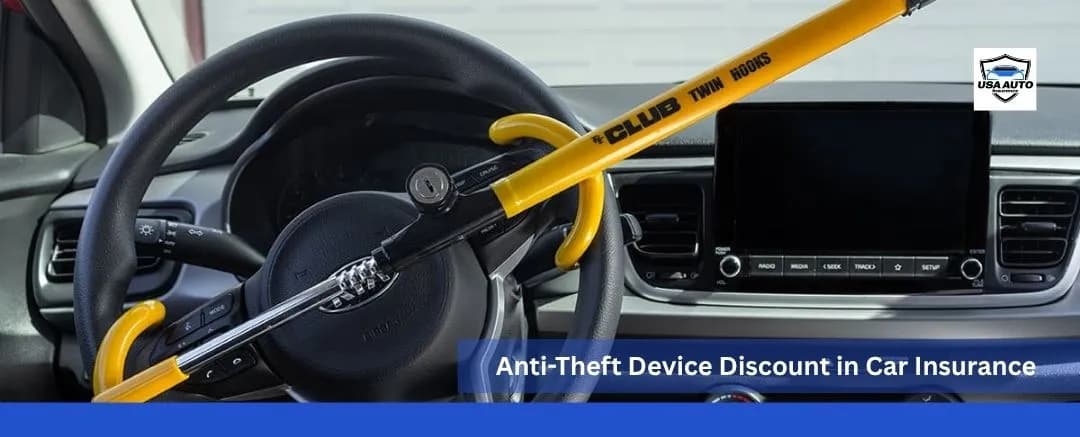
Anti-Theft Device Discount in Car Insurance
Did you know that you can lower your auto insurance premiums by having, or installing, anti-theft devices in your car? Most modern cars have built-in anti-theft features like engine immobilizers and basic security systems like sound alarms, shock sensors, and a remote key fob.

USA Auto Insurance
USA Auto is a licensed Managing General Agent (MGA) providing auto insurance policies underwritten by USA Underwriters Insurance Company.
Support
Copyright © USA Auto
Built by Neutrix | Powered by Neutrix Systems